

4.2/5
Promotions
3.2/5
Market Coverage
4.7/5
Banking
4.8/5
Banking
3.5/5
Customer Support
3.7/5
User Experience & Responsible Trading
5.0/5
TRADE $25, GET $25
Quick answer: Is Kalshi legit?
Yes. Kalshi runs through KalshiEX, LLC, a Commodity Futures Trading Commission (CFTC)-registered Designated Contract Market first approved in 2020, with trades cleared by its affiliate Kalshi Klear LLC. Testing found a well-built, broad platform: a 4.2/5 overall score, with User Experience & Responsible Trading as the clear standout (a perfect 5.0/5) and Liquidity as the one real limiter (3.5/5).
The strongest case for Kalshi is what you can actually trade and how well its systems work: more than 5,100 live markets across eight categories, every one of the seven Responsible Trading tools present and working, and a real market settlement that put money in my account nine minutes after a game ended. The honest caveat is the quiet market I picked for testing, which cost nearly 19% to exit after a 1-2-day wait, and a live chat that took hours to reach a human, twice.
Trade on Sports, Politics, and MORE
Largest Prediction Market in the US
Hundreds of Markets to Choose From
What is Kalshi?
Kalshi lets traders buy and sell contracts tied to whether a real-world event occurs, from a presidential nomination to a video game release date. Each contract settles at $1 if the event happens, or $0 if it doesn’t, with the live price acting as the market’s running estimate of the odds. Kalshi covers eight broad categories plus a novelty bucket, and its contracts are federally regulated rather than offered through a crypto-native or offshore structure.
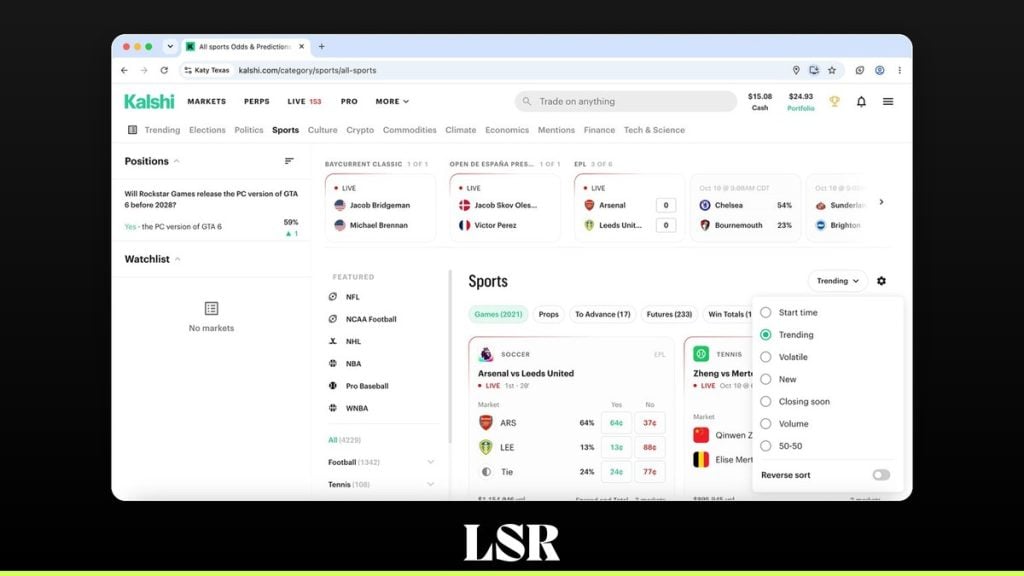
Evidence of what I tested and learned about Kalshi
| Finding | Details | The Experience Shaped the… |
| Welcome offer claimed and verified | I traded $25 after signing up with the promo code and received the full $25 in bonus credit, a clean 1-to-1 match. | Our 3.2 Promotions score |
| A full count of live markets across nine categories | I counted at least 5,189 live markets, with Sports alone topping 4,355. | Our 4.7 Market Coverage score |
| A real settlement timed to the minute | A Korean League 2 soccer match I’d traded settled the moment the final whistle blew, and the money was withdrawable nine minutes later. | Our 4.8 Banking score |
| Two real $10 trades, tracked start to finish | My busy-market Texas Senate trade cost 6.60% round-trip; my quiet GTA 6 release-date trade cost nearly 19% after a 1-2 day wait. | Our 3.5 Liquidity score |
| Live chat tested twice, both times a long wait for a real person | My first human handoff took roughly nine hours; my second took six, and both still read as automated. | Our 3.7 Customer Support score |
| All seven Responsible Trading tools checked by hand | Deposit limits, a cooling-off period, self-exclusion, and crisis-line signposting were among them; each was present and actually worked. | Our 5.0 UX & Responsible Trading score |
Kalshi promotions: 3.2/5
Like most prediction markets, Kalshi has a welcome promo for new users. Kalshi’s current welcome offer is Trade $25, Get $25 in bonus credit. Use code VAULTLS to activate it.
| Field | Detail |
| Welcome Offer | Trade $25, Get $25 in bonus credit |
| Promo Code Required | Yes — VAULTLS |
| Unlock Requirement | $25 in cumulative trading, within 3 days of creating an account |
| Expiration Window | 1 week after issuance |
| Market Restrictions | Usable on all Predictions markets; not usable on Perps |
| Referral Program | Up to $2,000 per successful referral; invitee must trade $25 |
| Kalshi Legal States | See “Where is Kalshi legal?” below |
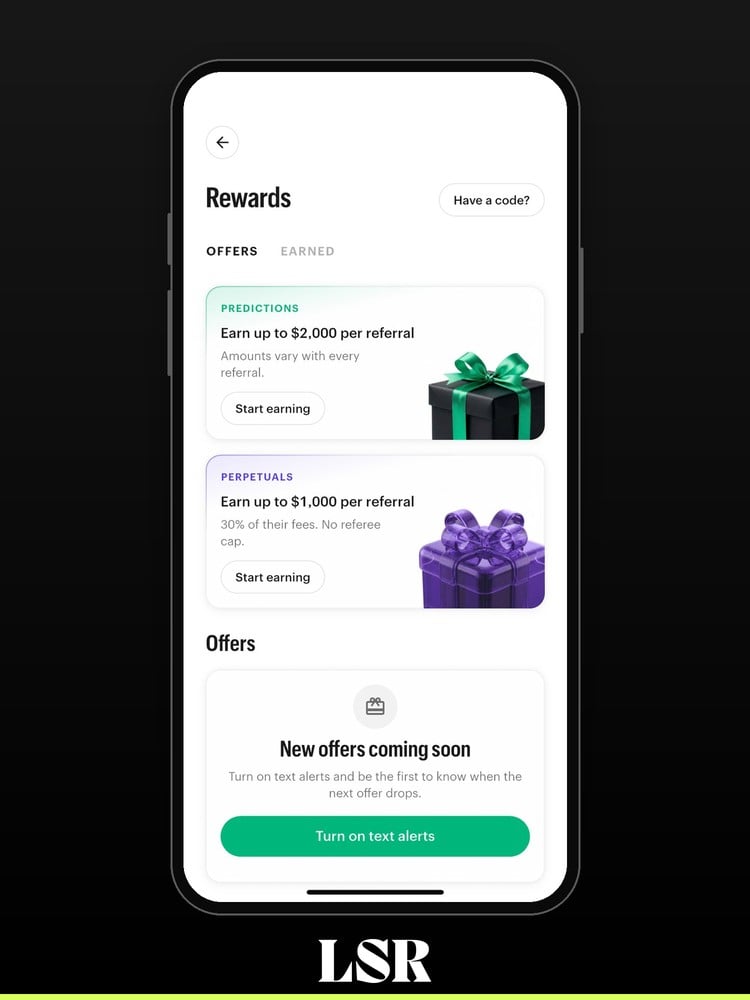
I claimed the offer by trading $25 after signing up, and the full $25 came back as credit right after, a clean 1-to-1 match. No separate deposit minimum applies to the offer itself, and I found no restriction tied to specific markets or odds ranges, though it can’t be used on Perps.
Kalshi’s referral program is the richer of its two offer types on paper: up to $2,000 per successful invite, with no out-of-pocket requirement for the referrer beyond getting a friend to trade $25. I found this inside a dedicated Rewards section, accessible from the main menu, with a code-entry field and the option to set up text alerts for future deals. For the full terms of the current offer and any updates, see LSR’s Kalshi promo page.
For a beginner who doesn’t want to put much down, $25 for $25 is a reasonable starting offer. It’s also a modest one next to richer welcome offers at other prediction-market platforms. For comparison, Gemini’s own welcome match runs at 50% up to $100, though it’s restricted to pro football markets, while Kalshi’s credit applies across its entire catalog.
A clean offer, capped low
Kalshi’s welcome bonus is simple and unrestricted by market type, which is worth something on its own. The math is what holds this category back: a 1-to-1 match on a $25 trade is a low ceiling next to how generous other prediction-market welcome offers can get, and there’s no second ongoing promotion beyond the referral program to pick up the slack. The referral program’s uncapped friend-count is a real plus for an active trader who already has people to invite.
Why I rated Kalshi promotions 3.2/5
A simple, unrestricted welcome match that unlocks easily, held back by a modest $25 ceiling and a thin ongoing-offer slate beyond the referral program.
Kalshi’s market selection and coverage: 4.7/5
Kalshi covers all eight major market categories, plus a novelty category. Here’s how the count broke down:
- Politics: 184+
- Economics & Business: 206+
- Geopolitics/World Events: 91+
- Culture/Entertainment: 96+
- Climate/Weather: 96+
- Tech & Science: 79+
- Crypto: 80
- Sports: 4,355
- Other/Novelty: 2 (two markets on US national Math and Reading test-score outcomes, filed by Kalshi under Education but counted here as Other since they’re about educational attainment, not tech or science)
That’s at least 5,189 live markets total, dominated by sports but with real depth everywhere else, too. Within Sports, 21 of the 27 leagues I checked had real depth, 5 or more live markets each, led by soccer (1,116), NFL (644), NCAA Football (542) and esports (465). Horse racing, Aussie rules, handball, poker and pickleball had no live markets at all, which Kalshi treats as a product choice rather than a regulatory gap.
I checked 16 markets across all eight categories to see how clearly each one discloses its settlement source. In each case, I asked the same question: “Does it name a real, independent, objective source for how it resolves?” 14 of 16 passed cleanly. The two exceptions both involved Kalshi retaining some judgment call in the settlement itself, on a Miami-temperature market and an “aliens confirmed” market.
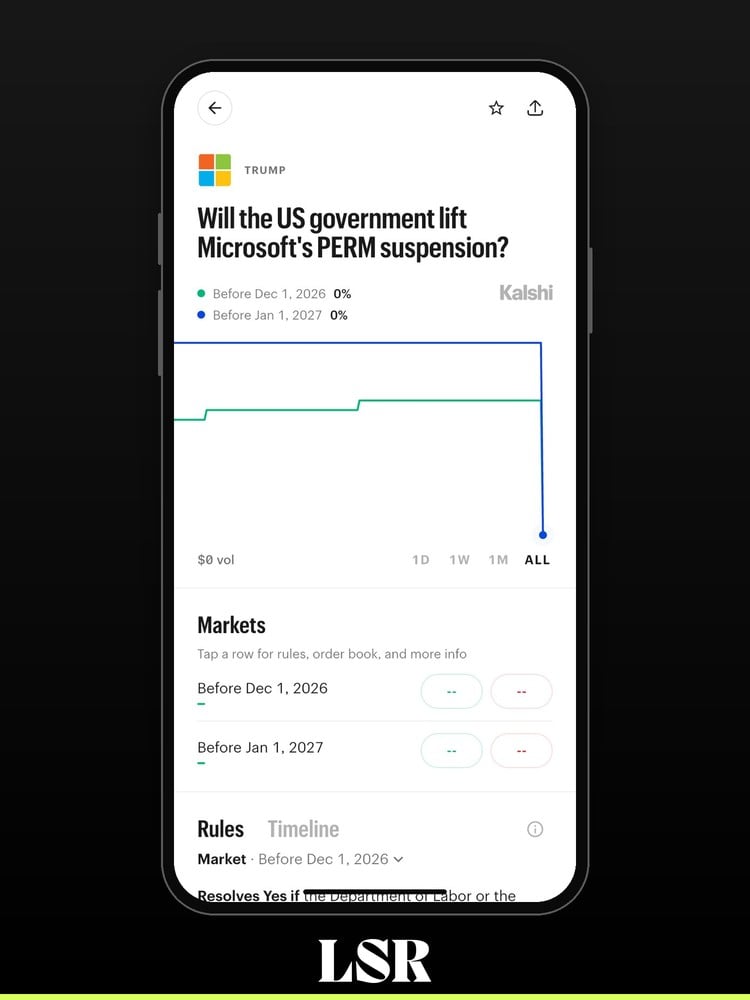
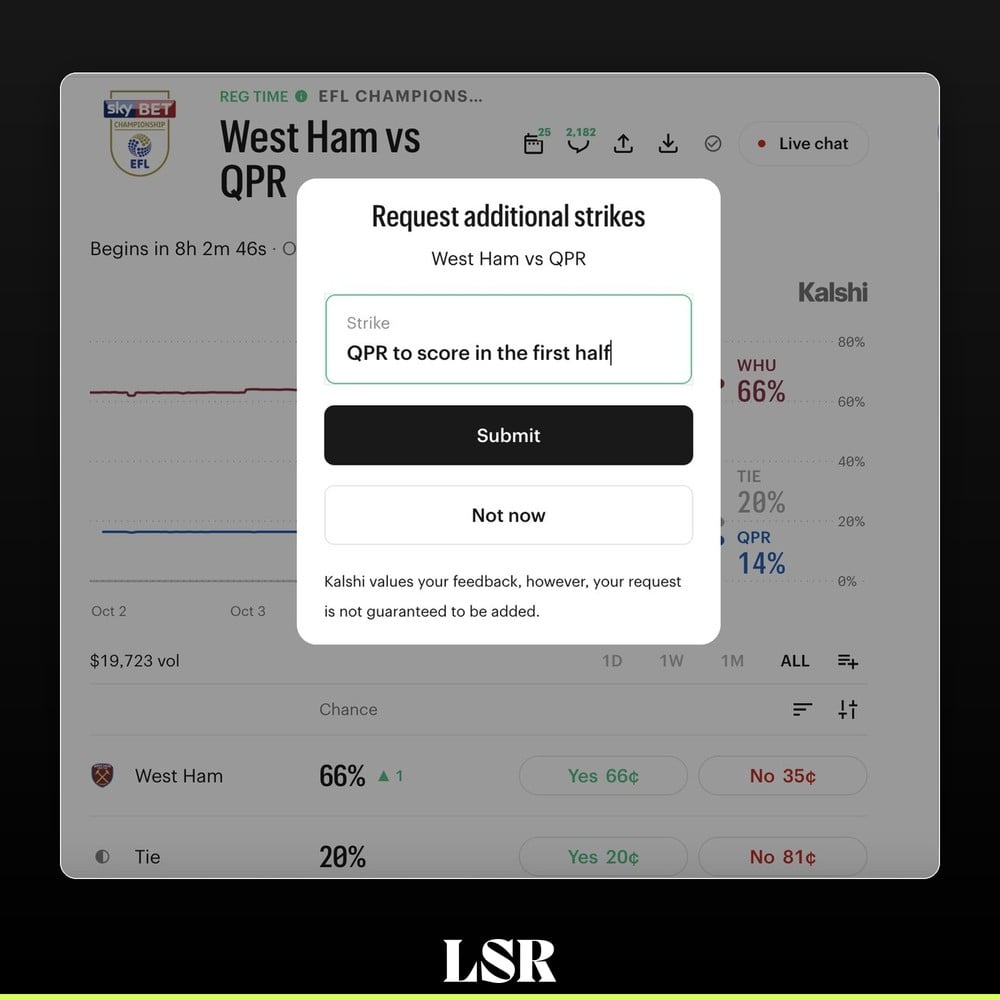
Kalshi also lets traders request new markets. I submitted a proposed English second-division soccer matchup and reached the submission step, though the team still has to approve it before it goes live. In a real-time test, Kalshi opened a market on a Microsoft labor-certification suspension within 10 hours of the news breaking, a fast turnaround on a live news event.
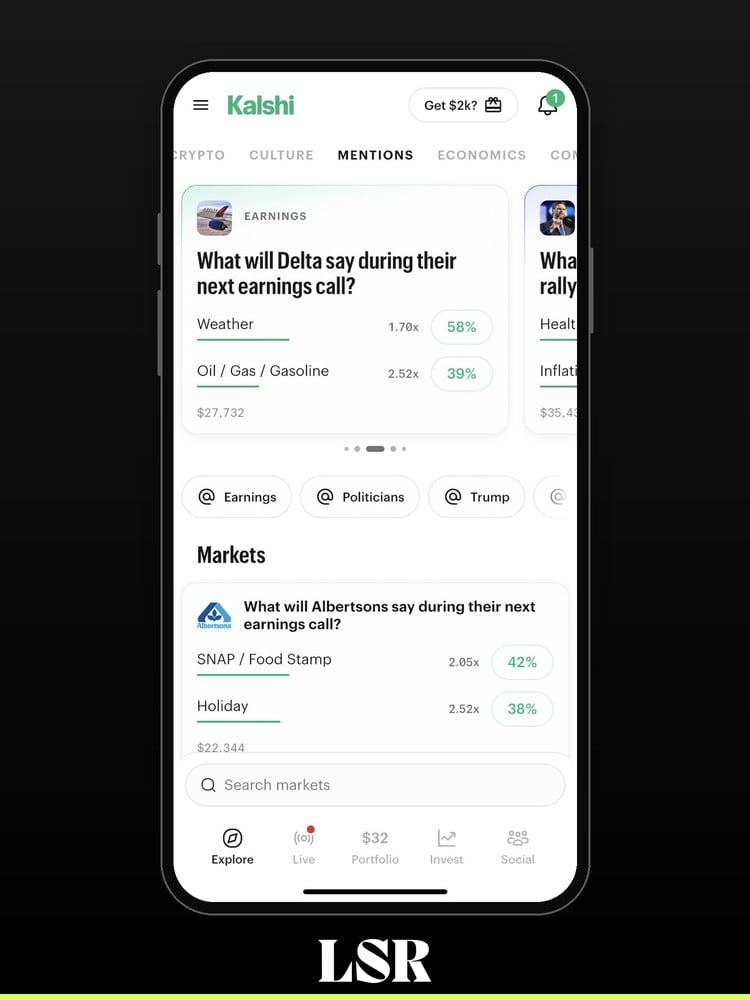
One standout: Kalshi’s Mentions markets let traders trade on whether a specific word or phrase gets said during a scheduled speech or appearance. A single political rally or earnings call can split into dozens of separate contracts this way.
Depth most platforms can’t match
Kalshi’s catalog goes well beyond its sports core. Politics, economics, culture, and even niche novelty markets all had real, counted depth rather than a single token market propping up a category header. The Mentions format is a genuine point of difference; I found nothing comparable on Gemini, Polymarket US, or Robinhood. Two of the 16 markets I checked didn’t fully disclose how they’re settled, and five sports leagues had no coverage at all, but neither dent is large next to the overall breadth on offer here.
Why I rated Kalshi market coverage 4.7/5
Genuine depth across all eight categories and a market-request feature that actually works, held back only slightly by two markets with unclear settlement sources and five uncovered niche sports leagues.
Kalshi deposits, withdrawals, and fees: 4.8/5
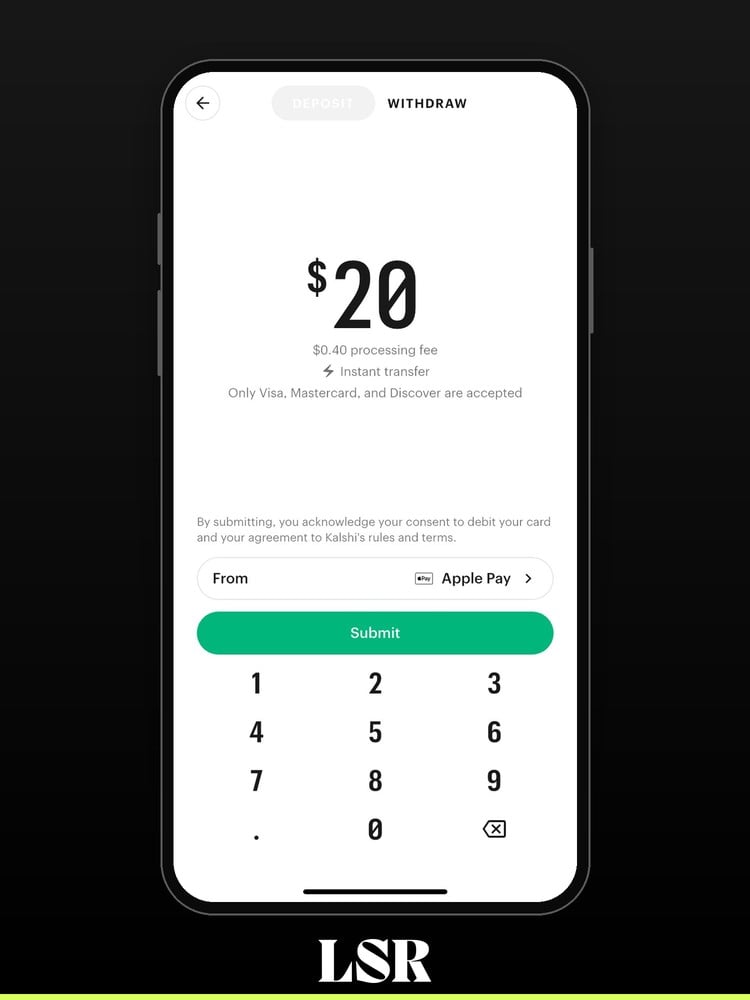
Kalshi supports deposits and withdrawals via ACH/bank transfer, debit/credit cards, digital wallets (Apple Pay, Venmo, PayPal, Cash App Pay), wire transfers, and cryptocurrencies. Paper checks aren’t supported either way.
| Method | Deposit? | Withdraw? | Speed (tested/stated) |
| ACH/bank transfer | Yes | Yes | Within 5 business days |
| Debit/credit card | Yes | Debit only | Instant in, 30 minutes out |
| Digital wallet | Yes | Yes | Instant in, minutes out (tested) |
| Wire transfer | Yes | Yes (large withdrawals) | Same business day if received before 4 p.m. ET |
| Cryptocurrency | Yes | Yes | 0-30 minutes both ways |
Deposits and withdrawals carry a $10 minimum. Fees run 2% on card and most digital wallet funding, 0.05% plus network fees on crypto, and nothing at all on ACH, wire, or Venmo. I withdrew to Venmo more than once during testing, and each one was credited within minutes with no charge.
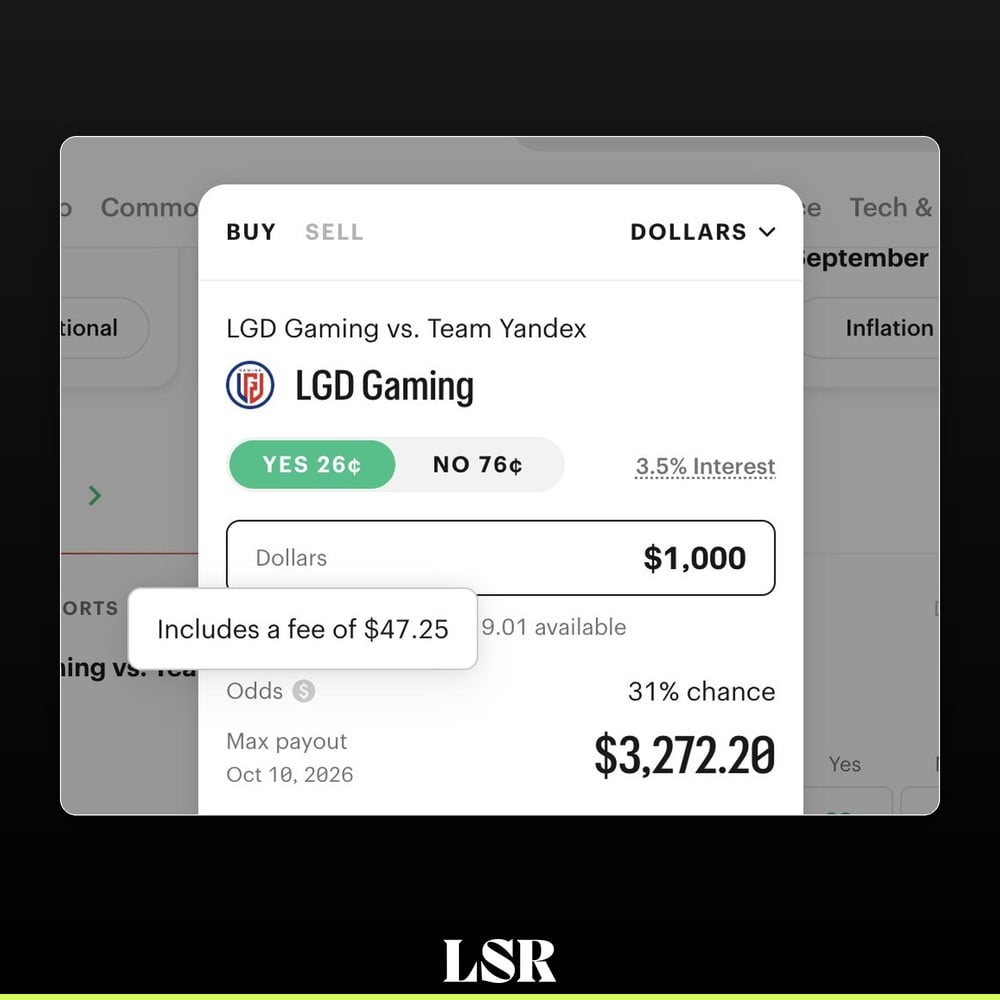
Kalshi’s trading fee is a real formula, not a flat rate: roughly 0.07 × contracts × price × (1 − price), rounded up. On a 50-cent contract, that’s about 2 cents for one contract or $1.75 for 100. The desktop order ticket shows this charge before you confirm it via an info tooltip; I couldn’t find the equivalent disclosure in the mobile app.
Kalshi pays 3.5% interest on idle cash. That interest extends to collateral locked up behind an open position, a real differentiator from Robinhood and Crypto.com, neither of which paid me anything comparable. I found no single account-wide position cap, though limits can vary by contract, and the minimum order size is 0.01 of a contract.
One real snag: a crypto deposit attempt on the app failed with a generic error after I entered my country of residence; the desktop flow eventually revealed that an SSN was required to proceed. One standout: a one-tap privacy mode that hides every account balance and position value from view.
Money moves fast, and tells you why
Kalshi’s banking setup held up well across all methods I tested. The funding page is easy to navigate, with linked methods shown first and limits and fees visible without digging through menus. The 3.5% interest on both cash and collateral is a genuine edge for anyone planning to hold a position for weeks rather than hours. My one real complaint: the trading fee shows up before confirmation on desktop, but I never found the same disclosure in the mobile app.
Why I rated Kalshi banking 4.8/5
Fast, well-disclosed, and fee-transparent on every method I tested, with a real interest rate on idle funds, losing only a little credit for one crypto-deposit error and a missing mobile fee disclosure.
What it really costs to trade on Kalshi: 3.5/5
I test and rate Liquidity here, because it answers whether you actually get the price you’re quoted. A $10 trade on Kalshi’s busiest market cost 6.60% round-trip; the same test on a quiet market cost nearly three times that.
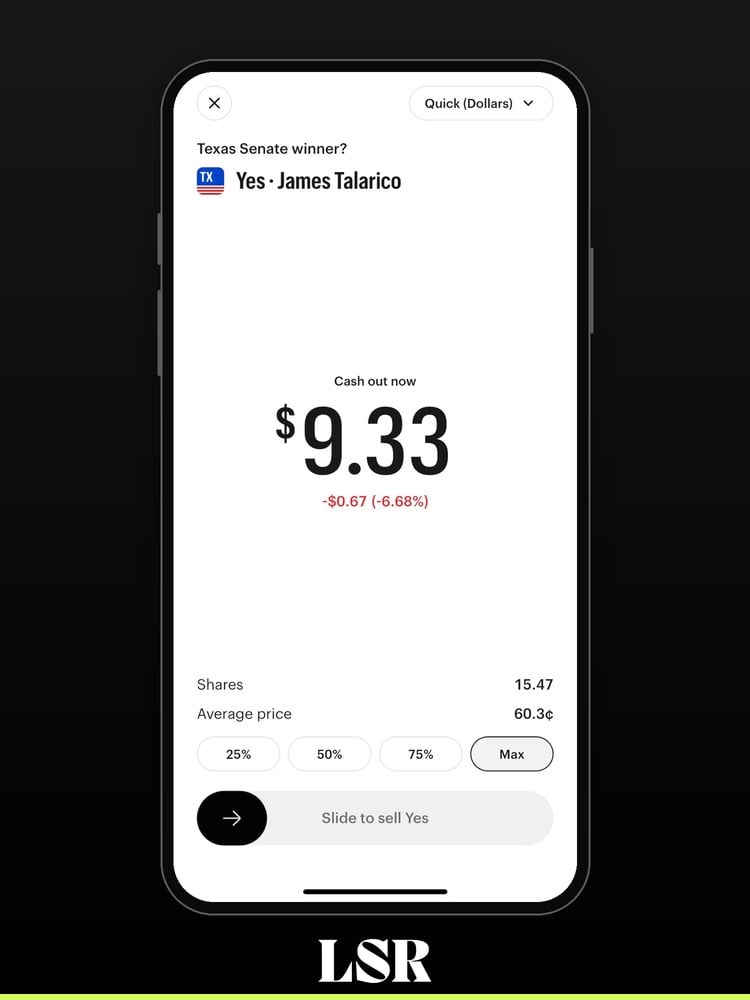
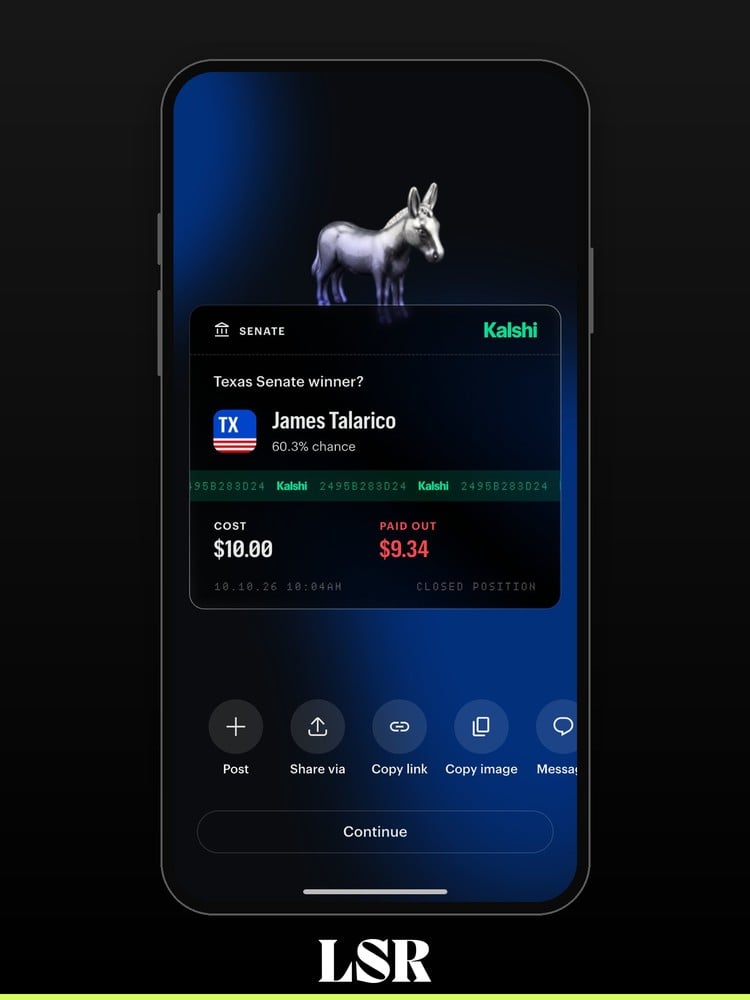
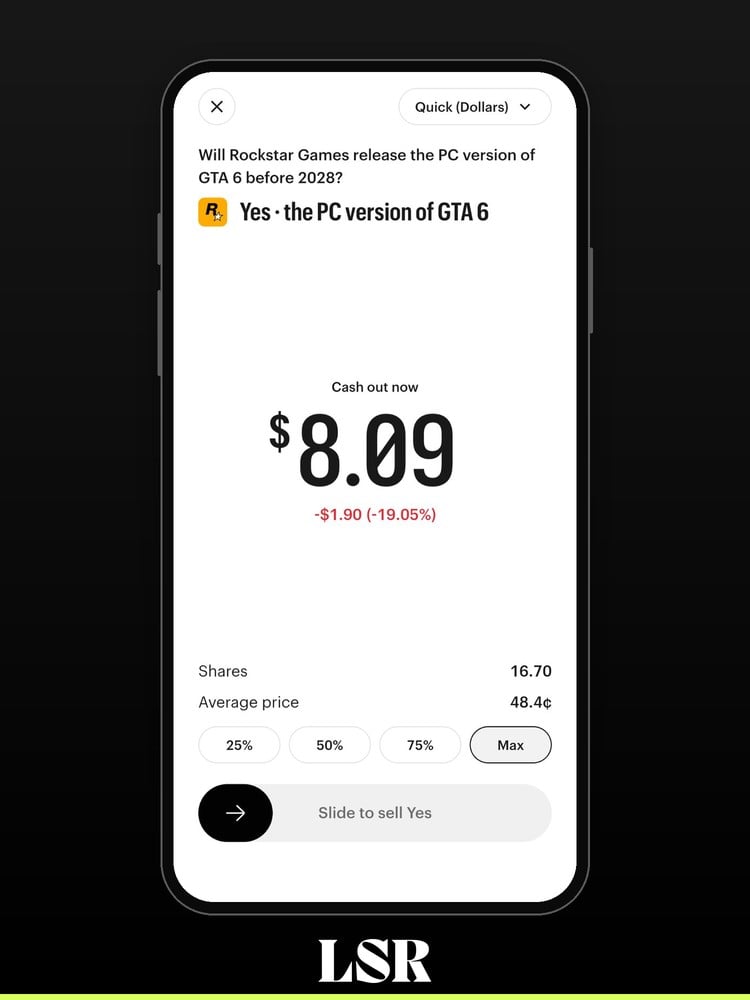
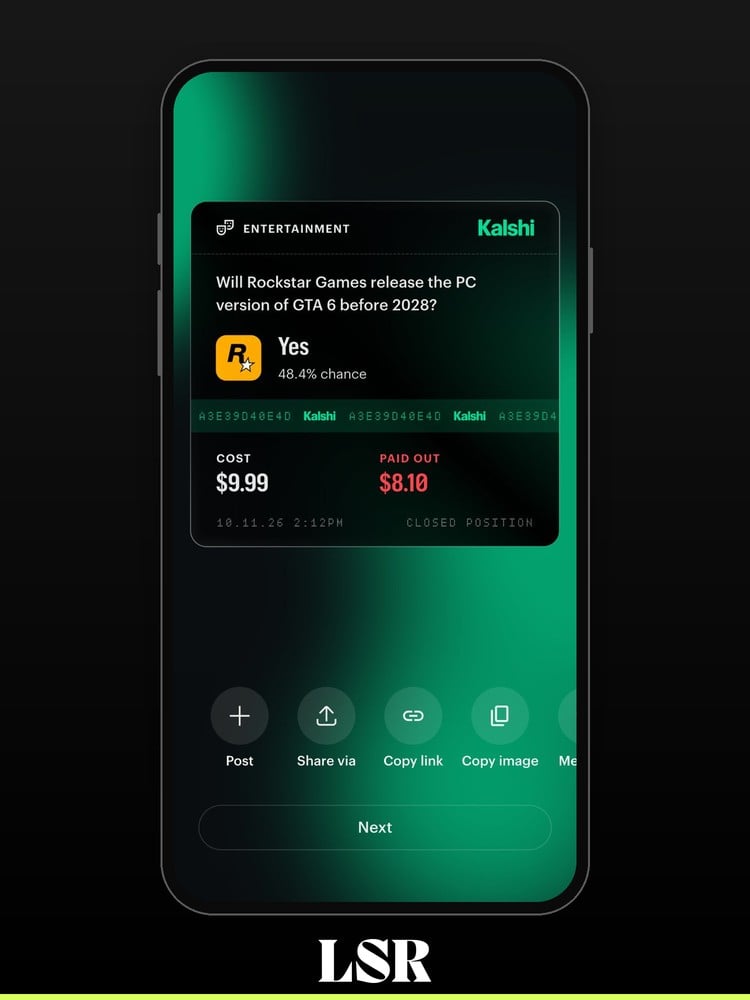
Kalshi prices every market through a real, visible bid/ask order book, not a quoted-price model. My busy market was a Texas Senate race, with $1.23 million in 24-hour volume; my quiet market was whether Rockstar would release the PC version of GTA 6 before 2028, with just $97 in 24-hour volume.
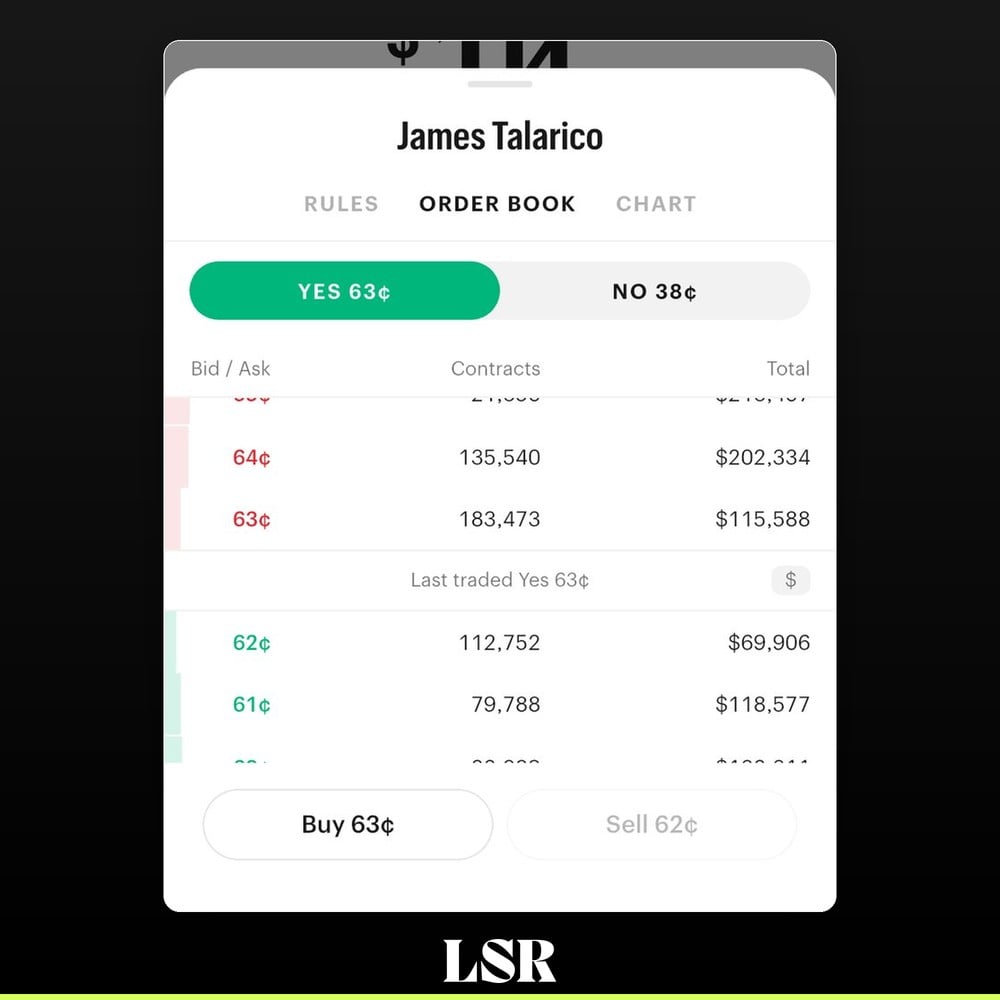
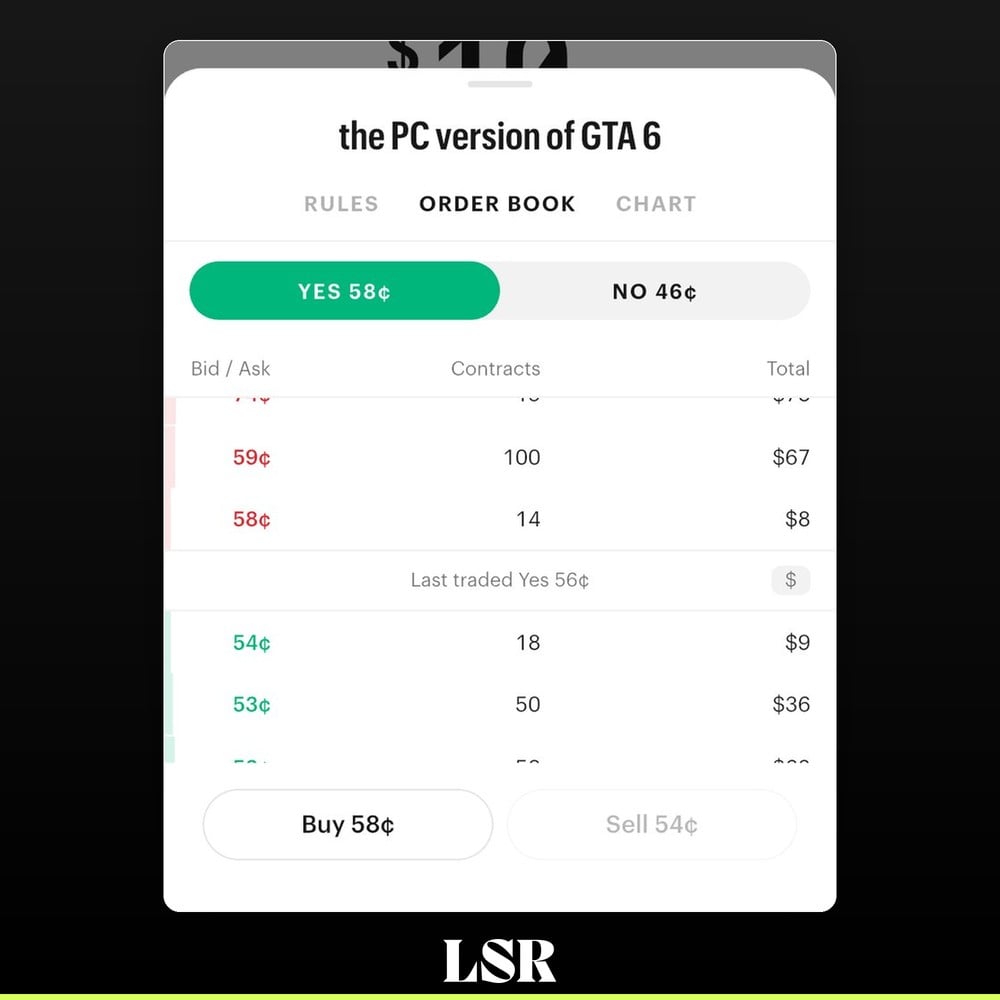
My busy-market order filled at the quoted price, with zero slippage. My quiet-market order used up the top price level and spilled into the next one, landing about a tenth of a cent above the quote I’d seen. I sold the busy position back out within 30 minutes, for a round-trip cost of 6.60% on my $10 stake.
The quiet market told a different story. When I came back 1-2 days later to exit, the order book had moved against me: the best bid had dropped, and the spread had widened. I still got the trade done, but at an effective cost of nearly 19% on my original $10, a real reminder that a thin market can get meaningfully more expensive to exit the longer a position sits.
Kalshi names both a Market Maker Program and a separate Liquidity Incentive Program, paying firms between $1 and $1,000 per market per day to keep tighter prices and real size on the book.
Cheap when it’s busy, expensive when it’s not
A busy Kalshi market behaves much as you’d hope: I paid a reasonable 6.60% to get in and out of a $10 position with no slippage on either leg. The quiet market was a different animal. Waiting a day or two before exiting cost me nearly three times as much, proportionally, as the busy-market round trip, and the book itself had visibly thinned and widened in that window. If you’re trading a niche market on Kalshi, the lesson is simple: the longer you wait to exit, the more the spread can work against you.
Why I rated Kalshi liquidity 3.5/5
Clean, no-slippage fills on a busy market, offset by a quiet market that got meaningfully more expensive to exit after only a day or two.
Kalshi customer service: 3.7/5
Kalshi offers two official contact channels: in-app/web live chat, staffed 24/7, and email (support@kalshi.com), also staffed around the clock. There’s no phone or text support.
I tested live chat twice, on separate occasions. The first handoff to a real person took roughly nine hours; the second took six. Both times, the replies still read as automated even after a “human” supposedly joined the thread.
My email received an instant AI reply within 2 minutes, followed by a real response from Kalshi’s Operations team 63 minutes later.
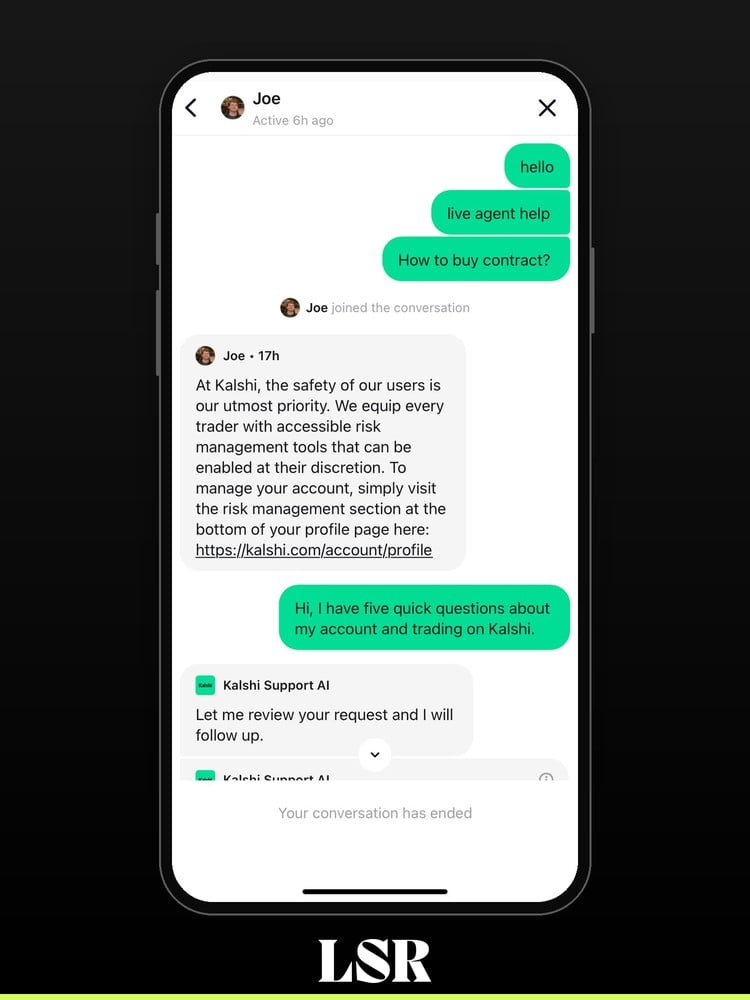
I asked support five specific questions:
| Question | Result |
| A promo/bonus term | Wrong, no documentation on the question |
| A withdrawal fee/timing rule | Correct, specific |
| A state-eligibility detail | Wrong, answered a different, unrelated question |
| A self-exclusion reversal question | Correct |
| The dispute-process question | Wrong, no documentation; the later human reply didn’t answer it either |
Kalshi does run a dedicated disputes path, separate from general support: claims must be filed within 2 years, with a $500 fee for requests under $5,000 and $1,000 for amounts above that. Kalshi’s terms also carry a binding arbitration clause, which I confirmed directly: “the obligation to submit to arbitration,” per the Member Agreement.
The Help Center itself was a genuine bright spot: a searchable article library covering funding, taxes, promotions and API tools, plus a “Copy for LLM” button I used to drop an article straight into another AI tool for a quick answer.
A great help center, a slow human
If you ask Kalshi’s support team a real question, expect the AI to answer first, and expect it to take real persistence to get past. Getting a genuine human took hours on both of my attempts, and even then, the replies still felt automated. Two of my five questions got a flat “no documentation” answer rather than a real one. The Help Center partly makes up for it: well-organized, searchable, and detailed enough that I rarely needed to contact anyone in the first place.
Why I rated Kalshi customer support 3.7/5
A strong self-serve Help Center undercut by a live-chat and email process that took hours to reach a real person and got two of five questions wrong.
Kalshi’s app, usability and responsible trading tools: 5.0/5
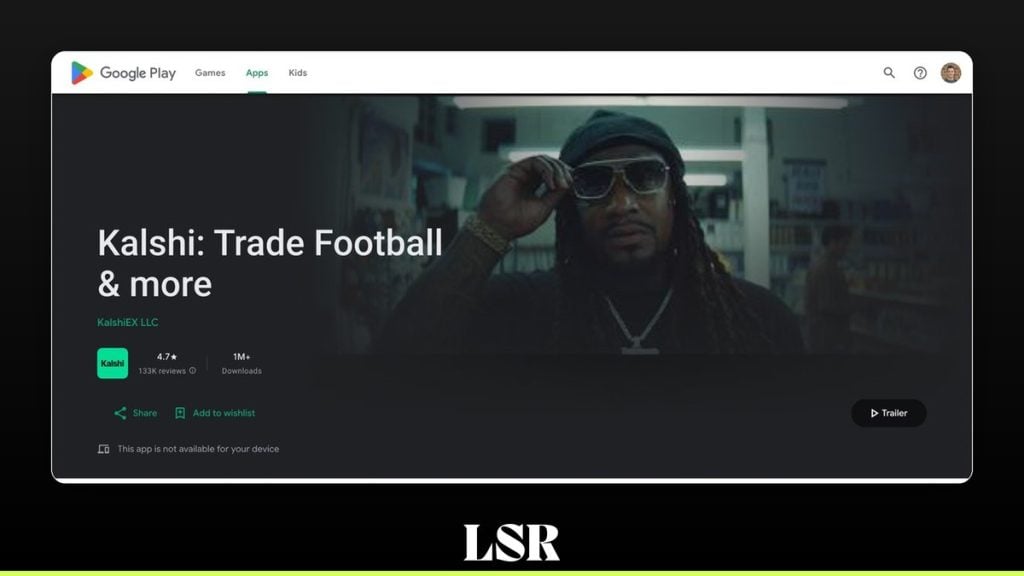
Kalshi runs mature apps on both iOS (rated 4.8 stars from more than 528,000 ratings) and Android (rated 4.7 stars from more than 109,000 reviews and over 1 million downloads). Trustpilot shows a much rougher 2.7 stars from 382 reviews.
Desktop and mobile stay close to feature parity, with a few real differences: desktop keeps open positions and a watchlist visible in the sidebar. At the same time, the app tucks both behind a menu, and desktop offers deeper sorting and filtering inside each category. I hit exactly one error during testing, a generic crypto-funding failure on mobile that desktop later explained (a missing SSN). I found no crashes, freezes, or slow loads otherwise.
The Portfolio view clearly separates withdrawable cash from collateral locked behind open positions, and a full, filterable trade history is available, along with downloadable tax documents for eligible accounts. I was able to close my own account from Account & Security, and two-factor authentication is on by default.
| Responsible Trading tool | Present? |
| Deposit/funding limit | Yes, monthly, takes effect immediately |
| Loss or exposure limit | Yes, daily, weekly, or monthly, with a 24-hour cooling-off period to change it |
| Session/elapsed-time reminder | Yes, logs you out once your set limit is hit |
| Cool-off/trading break | Yes, 1 day or more |
| Self-exclusion | Yes, via SelfExclude.io, 1 month to 1 year |
| Education/crisis-line signposting | Yes, National Council on Problem Gambling, Birches Health, 988 Lifeline |
| Age verification | Yes, 18+, enforced via KYC at signup |
Every one of the seven Responsible Trading tools was present and actually worked, not just listed on a page somewhere. Kalshi also discloses a behavioral-monitoring system, Health Check, which can recommend a personalized deposit limit, and an above-and-beyond feature called Inner Circle that lets trusted friends or family monitor your trading activity with your permission.
Every responsible-trading box, actually checked
As a piece of software, Kalshi is genuinely well-built: fast, stable, and clear about where your money sits. The one real functional gap I found in testing was a single mobile funding error that was quickly explained once I switched to desktop. On the Responsible Trading side, every one of the seven tools showed up and worked as described, a clean sweep I didn’t see when I checked the same tools on Gemini. Kalshi’s Inner Circle and Health Check features go further still, offering real accountability tools beyond what’s strictly required.
Why I rated Kalshi UX & responsible trading 5.0/5
A stable, fast platform with a full, working set of Responsible Trading tools and real above-and-beyond features, with effectively nothing to mark down.
Is Kalshi legal and safe?
KalshiEX, LLC is the entity that operates the exchange itself, registered with the CFTC as a Designated Contract Market since Nov. 3, 2020. Its affiliate, Kalshi Klear LLC, clears every trade and holds the required collateral as a registered Derivatives Clearing Organization. Kalshi Inc. is the parent holding company; it isn’t itself CFTC-registered as an exchange or clearinghouse.
Custody is the most important thing to understand here. Prediction-market collateral sits in segregated US bank accounts held through Kalshi Klear, currently settled through Silicon Valley Bank, a division of First Citizens Bank. FDIC coverage is possible through an insured cash-sweep program. Still, Kalshi says it isn’t guaranteed to individual traders, and no equivalent SIPC protection applies to a direct prediction-market account.
The markets I traded during testing were all self-certified rather than affirmatively approved by the CFTC, meaning Kalshi itself decided they were allowed to list them. The stated minimum age is 18+.
Regulatory history
Kalshi has held CFTC designation as a Designated Contract Market since 2020. Its authority to self-certify and list contested contract types, including congressional-control markets, has been litigated; courts have sided with Kalshi each time that question has reached them.
Kalshi’s terms let it amend or cancel a contract’s specifications after listing under defined conditions, require CFTC notice “beforehand when practicable, otherwise within 24 hours,” and bind traders to arbitration: “Any award or relief granted by the arbitrators hereunder shall be final and binding on the parties hereto,” with a 2-year filing deadline.
On taxes, Kalshi says plainly that it “does not report profits/losses to the IRS.” It issues Form 1099-INT at $10 or more in interest, Form 1099-MISC for credits and rewards at a $2,000 threshold, and Form 1099-DA for reportable digital-asset transactions through its crypto processor. Kalshi describes winning contracts as producing “taxable capital gains.”
Where is Kalshi legal?
Kalshi is available in every state except Michigan, Nevada, and Washington, per LSR’s own current Prediction Markets listing. Testing for this review was done from Texas, where access was confirmed firsthand.
Comparison with other prediction markets
| Platform | Welcome Bonus | Markets | Payments | Sell Positions Early? |
| Kalshi | Trade $25, Get $25 in bonus credit (code VAULTLS) | Politics, sports, economics, crypto, culture, climate, tech, geopolitics | ACH, debit/credit, Apple Pay, Venmo, PayPal, Cash App Pay, wire, crypto | Yes |
| Underdog Predict | Keep Your $1,000,000 in bonus funds + 50% deposit match up to $1,000 (code BETLSRPM) | Sports only | ACH, debit, Apple Pay, Venmo | Yes |
| Polymarket | $25 trading credit on a $10 qualifying deposit (code TRADELSR) | Politics, sports, finance, crypto | Crypto, credit/debit card, PayPal, bank transfer | Yes |
| Fanatics Markets | Up to $150 in FanCash (no code needed) | Sports outcomes, finance, economics, politics (more coming in 2026) | Trustly, Aeropay, debit card | Yes |
My verdict on Kalshi
Kalshi is a broad, well-regulated prediction market that covers far more ground than most of its rivals, and it backs that breadth with genuinely strong software and trader-protection tools. The 4.2/5 overall score reflects a platform that’s excellent where it matters most day-to-day, with two specific, real weak points.
The strengths are substantial: more than 5,100 live markets across eight categories, a trading fee and interest structure that’s disclosed clearly and pays 3.5% on idle cash, and a perfect sweep on Responsible Trading tools, all 7 present and working. A real market settlement put funds in my account in nine minutes, and privacy mode and the Inner Circle accountability feature go beyond what’s required.
The weaknesses are just as real. Reaching an actual human in live chat took hours, twice, and even then the responses still read as automated. Two of the five questions I asked support came back wrong. And the quiet market I traded cost nearly three times as much, proportionally, to exit after a short wait as the busy market did immediately.
Overall score: 4.2/5. Kalshi is a strong pick for a trader who wants genuine breadth beyond sports and is comfortable navigating a busy order book. A trader who expects fast, human customer support, or who plans to trade thin, niche markets and hold positions for more than a day or two, should weigh that trade-off carefully first.
Kalshi FAQ
Yes. It runs through KalshiEX, LLC, a CFTC-registered Designated Contract Market since 2020, with funds held in segregated accounts through its clearing affiliate, Kalshi Klear LLC.
Kalshi is available in every state except Michigan, Nevada, and Washington.
A per-trade fee, based on a published formula (roughly 7% of the contract’s price multiplied by its distance from $1, rounded up), appears on the desktop order ticket before you confirm. Testing also found a round-trip trading cost of 6.60% on a busy market and nearly 19% on a quiet one.
Digital wallet withdrawals, such as on Venmo, were processed within minutes during testing with no fee. Bank transfers can take up to 5 business days.
Yes, VAULTLS, good for Trade $25, Get $25 in bonus credit.
It depends heavily on the market. A busy market has zero slippage and incurs 6.60% entry and exit costs. A quiet market costs nearly 19% to exit after only a one- to two-day wait.
No. Kalshi’s prediction-market positions are fully cash-collateralized, confirmed in testing and in Kalshi’s own terms. There’s no margin or credit-funded trading on the product reviewed here.
Kalshi doesn’t report trading profits or losses directly to the IRS, but it issues a 1099-INT for interest earned and a 1099-MISC for credits and rewards above $2,000. It describes winning contracts as producing “taxable capital gains.” Consult a tax professional for your own situation.
Trading involves risk, including the risk of total loss on any position. Not available in Michigan, Nevada, or Washington. You must be 18 or older to trade. If you or someone you know has a problem, call the National Council on Problem Gambling at 1-800-522-4700.