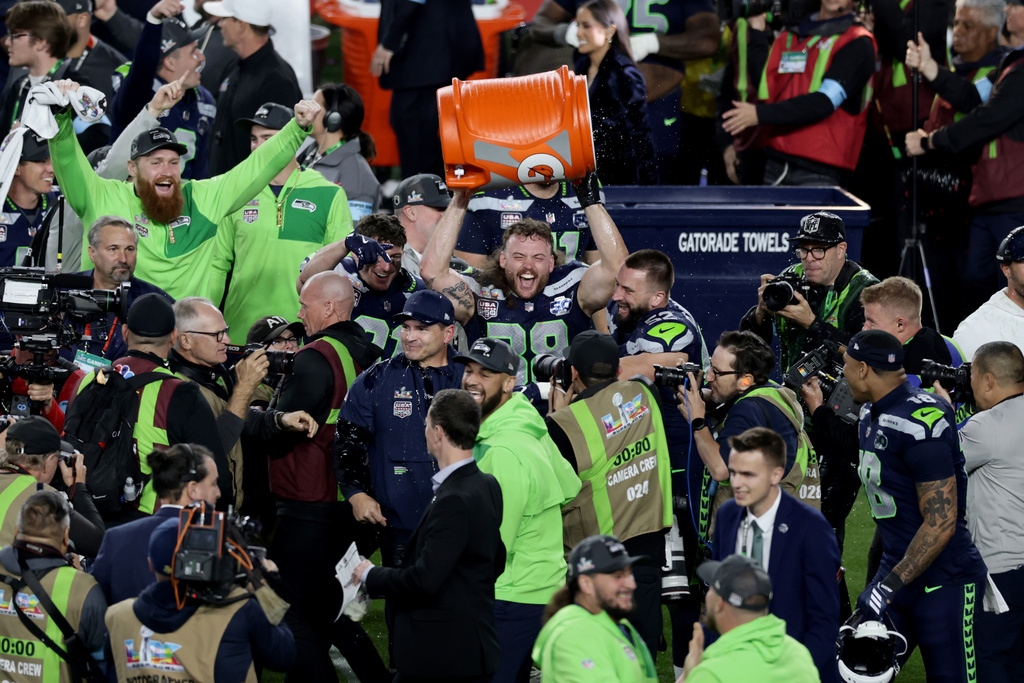
Super Bowl LX produced the kind of headline results that sportsbooks typically favor.
The Seattle Seahawks won outright and covered the spread, while the game finished under the total, outcomes aligned with both ticket and handle distribution across major sportsbooks.
But betting volume, regional returns and underlying exposure tell a more nuanced story.
Nevada sees 10-year Super Bowl betting low
Nevada sportsbooks took in $133.8 million on the game, the lowest Super Bowl betting handle in the state in a decade and the smallest of the post-PASPA era.
Sportsbooks held 7.4% of that handle, generating roughly $9.9 million in win — down sharply from a record 14.6% hold recorded last year.
Nevada’s betting market remains uniquely dependent on in-person wagering and tied to visitor volume and event travel, in part because mobile wagering still requires in-person registration. That localized exposure has weighed on Las Vegas, where tourism fell roughly 7.5% in 2025.
Nevada is the first state to release Super Bowl figures, and its handle decline contrasts with expectations for record nationwide betting activity. Outcomes frequently differ at the state level; last year, New York reported a windfall win while Pennsylvania operators absorbed losses.
Half a billion tied up in parlays?
Legal Sports Report projected a record $1.71 billion wagered on the game, with more than 25% of handle estimated to have been tied to same-game parlays. Citizens Bank estimated player prop markets to account for roughly 50% to 60% of Super Bowl wagering based on tracking activity across pick’em platforms such as PrizePicks and Underdog, which skew more heavily toward props by design.
Headline markets in Super Bowl LIX also broke in bettors’ favor, prompting early assumptions sportsbooks had posted a poor outcome. Subsequent disclosures told a different story as prop and same-game parlay exposure drove one of the most profitable single-game performances of the year for several operators.
Super Bowl LX followed a similar liability script and that exposure concentration ultimately dictated sportsbook liability.
Game flow suppresses scoring-dependent outcomes
Seattle led 9-0 at halftime and 12-0 entering the fourth quarter, suppressing scoring markets that typically drive same-game parlay survival and prop payouts. Nine of the game’s first 12 possessions ended in punts or field goals, with neither offense sustaining red zone pressure. Touchdown markets remained dormant deep into the second half, a favorable environment for sportsbooks carrying exposure on scoring props and multi-leg parlays.
Even productive drives failed to escalate liability. Seattle’s early red zone trip ended in a field goal, while Kenneth Walker III cleared rushing yardage thresholds without reaching the end zone, limiting correlated payouts tied to his scoring ladders. The risk briefly escalated late when a 49-yard Walker touchdown run, which would have triggered a wave of props and parlays, was wiped out by a holding penalty.
“Only four touchdowns being scored was a great result for us,” said Christian Cipollini, senior trading manager at BetMGM.
TD distribution drives Super Bowl betting exposure
Just two of those scorers appeared among theScore Bet’s six most popular same-game parlay legs, while heavily bet props tied to bigger names lost:
- Seahawks moneyline (✓)
- Kenneth Walker III anytime touchdown (X)
- Jaxon Smith-Njigba anytime touchdown (X)
- Rhamondre Stevenson anytime touchdown (✓)
- Stefon Diggs anytime touchdown (X)
- Drake Maye anytime touchdown (X)
MVP positioning reflected the same exposure skew. Sam Darnold accounted for 21.6% of handle, followed by Drake Maye at 19.7%, while Jaxon Smith-Njigba drew significant bettor exposure as well. Walker ultimately won the award but represented just 6.7% of handle, limiting liability tied to higher-exposure candidates reliant on multi-touchdown outcomes that never materialized.
Prediction markets offer richer insight
While calculated differently than sportsbook hold prediction market volume provides a parallel window into how bettors positioned around the game.
LSR tracked $438.7 million in trading volume across 56 sports markets with 816 outcomes related to the Super Bowl on Kalshi, with the winner market accounting for 56% of that total. Super Bowl MVP represented 12%, followed by point spread trading at 9%. Among the highest-volume anytime touchdown contracts were Jaxon Smith-Njigba ($1.73 million), Cooper Kupp ($1.5 million) and Kenneth Walker III ($1.45 million), all of which failed to cash. Of the 20 most traded game props on the platform, only three settled as winners.
Trading volume offers directional insight but does not equate to sportsbook handle. Contracts can be traded multiple times before settlement, inflating volume, while sportsbook handle reflects dollars risked once, a distinction LSR analyst Eric Ramsey said complicates direct comparison.
More than $113.5 million in volume was tied to markets predicting which song would open the halftime show, ranking among the platform’s most traded Super Bowl contracts outside core game markets. Polymarket saw similar engagement, including more than $2.8 million traded on whether Cardi B would appear during the performance. The artist appeared onstage but did not sing, prompting disagreement over settlement criteria. Kalshi resolved the contract at the last traded price, citing ambiguity in performance definitions.
All eyes now turn to operator hold reports in the weeks and months ahead, when regulators and publicly traded sportsbooks begin disclosing Super Bowl performance across state filings and quarterly earnings.