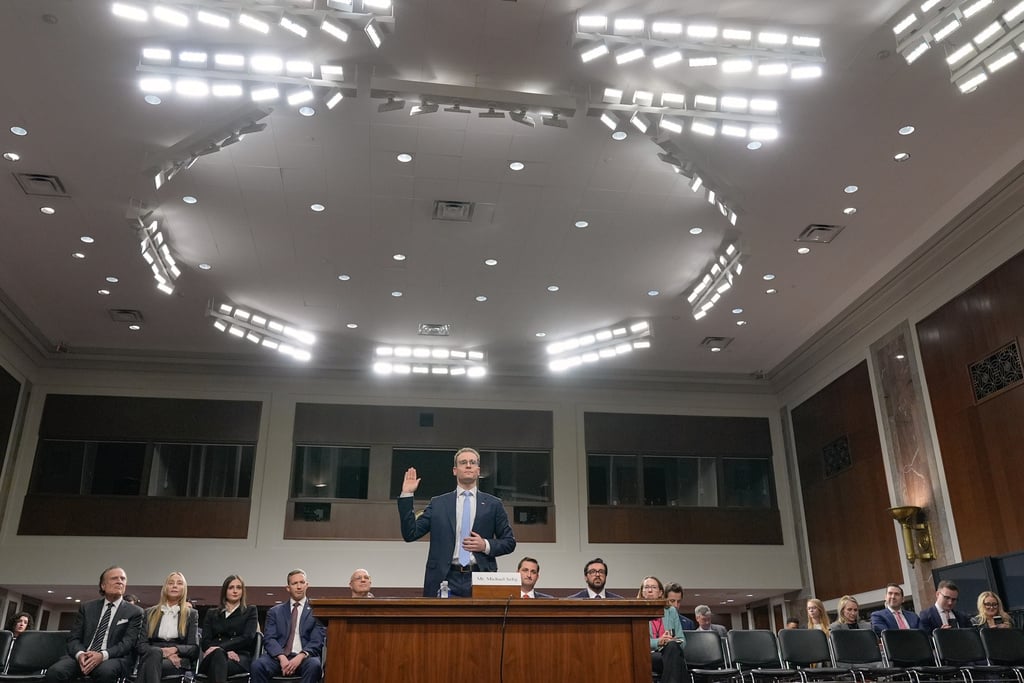
The head of the federal agency that oversees prediction markets is preparing to modernize its rulebook as burgeoning financial products, including sports contracts, rapidly scale.
In a Washington Post op-ed on Tuesday, Commodity Futures Trading Commission Chairman Michael Selig said he has launched a “future-proof” initiative that will trigger a broad review of the CFTC’s existing rules. Selig described it as an effort to replace regulations unequipped for modern futures markets and trading tools, signaling a more active role for the agency soon after of a year of de facto inaction.
“As new asset classes emerge and the CFTC’s role evolves, guidelines we establish should not just fit the product, but also serve a tailored regulatory purpose,” Selig said. “Prediction markets have exploded in popularity as broad swaths of market participants seek to hedge portfolio risks and test their abilities to forecast truth.”
Selig’s comments come as sports prediction markets have become one of the most contested issues on the CFTC’s plate, fueling a wave of state-level legal challenges and repeated calls from professional leagues, the NCAA and others for the agency to tighten oversight.
No more ‘regulation by enforcement‘
Selig mentioned prediction markets by name only once, focusing on the agency’s larger initiative to break from “regulation by enforcement,” and promised to move toward clearer, more durable standards via formal rulemaking.
“Arbitrary, cumbersome and opaque rules will not stand the test of time,” Selig said. “The CFTC’s approach should be to deliver the minimum effective dose of regulation — nothing more and nothing less. This means an end to policymaking through enforcement. And this means the agency’s policymaking divisions will develop clear rules of the road for market participants that will be codified through notice-and-comment rulemaking to ensure that the regulatory requirements do not change wildly from administration to administration.”
Selig expanded on his approach in an Twitter/X thread, saying the CFTC’s Innovation Advisory Committee will help shape “purpose-fit rules for prediction markets, digital assets and other emerging asset classes.”
He further indicated additional policy changes are coming, writing that the agency will announce more moves “in the days ahead” aimed at future-proofing the CFTC’s regulatory posture.
Prediction markets surge amid inaction
Over the past year, sports event contracts have moved from a niche offering to a mainstream betting-adjacent product with parlays and sportsbook-restricted markets across all 50 states.
Kalshi began listing sports contracts around last year’s Super Bowl. Since then, it has taken in nearly $30 billion in trading volume, with more than 90% tied to sports, and its valuation has climbed to roughly $11 billion following a series of funding rounds. The company continues to expand through partnerships with major media brands and pro sports leagues, including CNN, CNBC and the NHL.
Without CFTC intervention, several states, including Nevada, New Jersey, Maryland, and Massachusetts, have tried to block sports contracts, arguing they amount to unlicensed sports betting that sidesteps state oversight and taxes. Kalshi and fellow prediction market Crypto.com contend their products are federally regulated event contracts under the Commodity Exchange Act. Courts have issued mixed rulings, with some judges pointing back to the CFTC’s role in interpreting the law. Selig has since signaled he will rely on courts, potentially the Supreme Court to resolve that question.
Meanwhile, with prediction markets available nationally, traditional sportsbook operators like DraftKings and FanDuel have launched their own prediction platforms as a path into states where sports betting remains illegal, including California and Texas.
CFTC pressed for guardrails
That growth has unfolded as the CFTC has faced scrutiny over how prediction markets can list new sports contracts through self-certification, which leagues and state regulators have argued allows markets to go live without meaningful oversight. The agency spent the past year without a permanent chair until Selig’s appointment in December, while four out of five commissioner seats remain unfilled.
The NBA and MLB have urged the agency to implement sportsbook-style protections, including limits on certain market types, identity verification, geolocation controls, suspicious activity reporting, integrity monitoring, and information-sharing requirements.
Those calls come as professional and college sports have been rocked by a string of FBI indictments since October, including cases tied to NBA insider betting, MLB micro-prop manipulation, and an alleged college basketball point-shaving ring, each of which was flagged through suspicious betting activity on legal sportsbooks.
“Federal regulators need to stabilize these markets,” NCAA President Charlie Baker wrote to the CFTC last week. “The answer cannot be the status quo.”