The NCAA is pressing federal regulators to step in to stop sports predictions from facilitating wages on college sports.
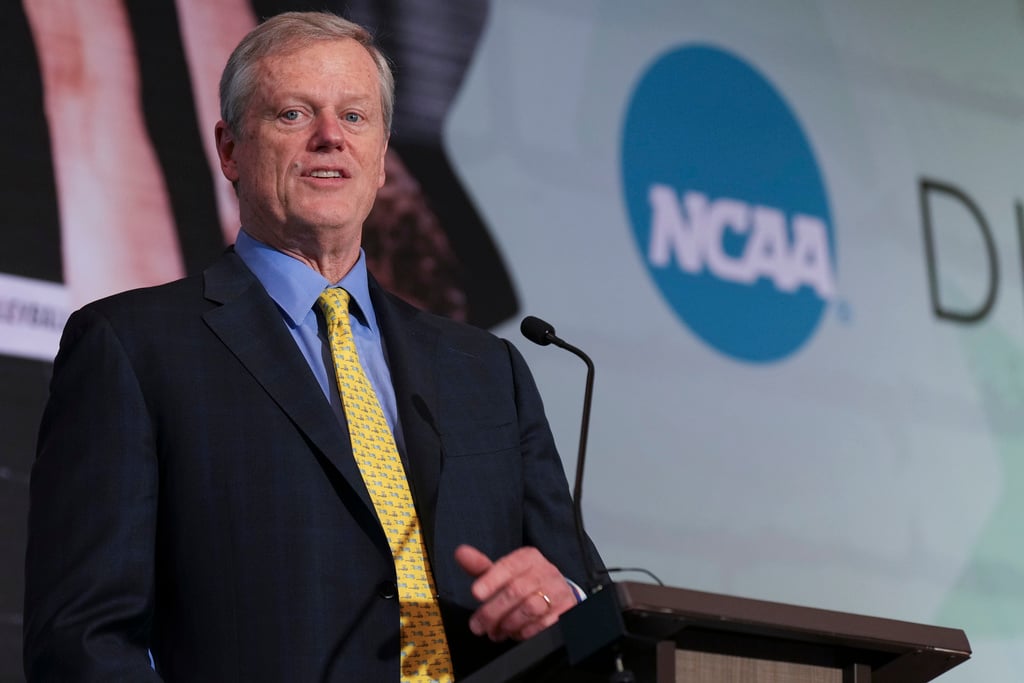
In a letter sent Wednesday to the Commodity Futures Trading Commission, NCAA President Charlie Baker urged the agency to suspend prediction markets on college games until robust safeguards are adopted, citing risks to athlete well-being and competitive integrity.
The request marks the NCAA’s strongest appeal yet to the CFTC and arrived less than 24 hours before federal authorities unveiled a widespread alleged college basketball point-shaving scheme.
NCAA flags gaps in oversight
In the letter, Baker argued that sports predictions lack protections standard in state-regulated sport betting including coordinated integrity monitoring, restrictions on athlete-specific markets, and required information sharing among operators.
“Just as we need Congress to stabilize eligibility, we need federal regulators to stabilize these markets. The answer cannot be the status quo. We need one set of fair, transparent standards,” Baker wrote to the CFTC.
While some exchanges employ third-party surveillance firms, Baker said prediction markets are not subject to uniform rules around bettor verification, geolocation tracking, or reporting suspicious activity. He called those safeguards essential for college athletics and said the NCAA is willing to work with the CFTC on a framework similar to the state regulations that govern legal sportsbooks.
The NCAA has repeatedly raised concerns about prediction markets pushing into sensitive areas of college sports, including recent proposals to list contracts on transfer portal decisions, a category of wagering illegal under 39 state sports betting laws.
College markets loom large for sports predictions
College football accounted for 32% of Kalshi’s OSB-equivalent sports handle in the first week of January, compared with 24% for the NFL and 22% for the NBA, according to data from HoldCrunch analyzed by Truist.
That dynamic stands in contrast to traditional sportsbooks, where NFL handle typically runs roughly four times higher than college football. On Kalshi, the gap is closer to 1.2x, suggesting a much heavier reliance on college events.
Controversies sharpen the debate
Despite mounting pressure from the NCAA, state regulators and other sports leagues, the CFTC has not indicated that it intends to weigh in on sports prediction markets, even as the legal fight over whether the products function as sports betting continues to play out in a plethora of courts.
Prediction market operators maintain they are federally regulated exchanges, not sportsbooks, and argue their contracts involve peer-to-peer trading rather than wagers against the house. The CFTC’s incoming leadership has suggested it may leave the issue to the courts, potentially all the way to the Supreme Court, a timeline some observers believe could stretch for years.
With college sports now a major driver of engagement and March Madness approaching, any federal pause would carry significant commercial implications, making swift intervention far from certain.