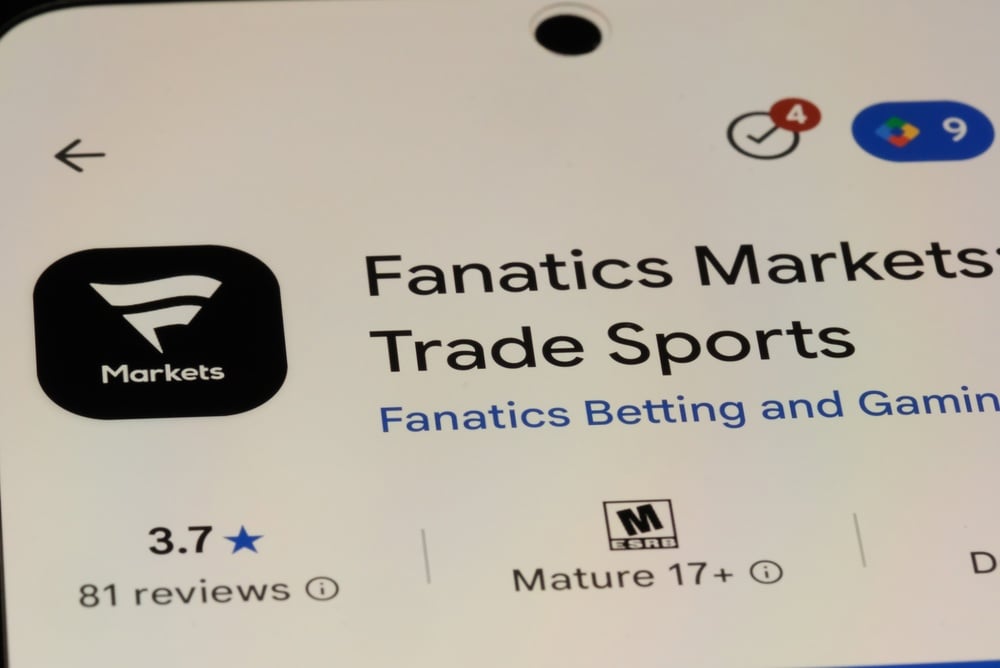
Fanatics is the latest sports betting operator to invest in bringing its prediction market infrastructure in-house.
Fanatics is acquiring Water Street Labs, a Commodity Futures Trading Commission-registered designated contract market, and CX Clearinghouse, a registered derivatives clearing organization from BGC Group, it announced Monday. The deal allows Fanatics Markets to list and clear its own federally regulated prediction market contracts rather than relying on outside exchange infrastructure from Crypto.com.
“By owning its own exchange and clearinghouse,” Fanatics Betting and Gaming CEO Matt King said, the company will have “the freedom to directly list and clear prediction markets.”
Fanatics the latest to move in-house
Until recently, many consumer-facing prediction market operators relied on third-party exchanges to list and clear contracts while serving primarily as customer-facing distributors:
- Underdog launched its own federally licensed exchange in July after previously relying on Kalshi and Crypto.com.
- DraftKings launched its proprietary DKeX exchange in June using infrastructure acquired from Railbird, after previously relying on CME Group and Crypto.com.
- Robinhood began routing event contracts in June through Rothera, a joint venture with Susquehanna, after previously directing customer orders to Kalshi.
Why operators want their own exchanges
Owning both a DCM and DCO allows companies to operate the marketplace themselves, capturing the economics of the exchange in-house while gaining greater control over product development, contract listings and the customer experience. It also gives operators greater flexibility to introduce new contract types and features without depending on third-party exchange infrastructure.
The strategy echoes the evolution of the U.S. online sportsbook industry after PASPA fell.
Many operators initially relied on third-party sportsbook technology before concluding long-term value lay in owning the underlying platform. DraftKings acquired SBTech before migrating off Kambi’s technology, FanDuel leveraged parent Flutter Entertainment’s proprietary pricing and risk platform, and Penn Entertainment spent roughly $2 billion acquiring theScore to own its betting technology stack.
But unlike traditional sportsbooks, which require state-by-state licenses, federally regulated event contract exchanges operate nationally, giving operators access to states where mobile sports betting remains unavailable.
Wall Street sees higher margins
Wall Street analysts increasingly view the industry’s push toward owning exchanges as more than simple vertical integration.
In a July 23 research note, Macquarie argued prediction markets more closely resemble financial exchanges than traditional sportsbooks, generating revenue by matching buyers and sellers instead of taking positions against customers. The firm said transaction fees, liquidity and network effects could ultimately produce higher margins than online sportsbooks, while identifying reliance on third-party infrastructure as a long-term business risk.
Citizens struck a similar tone in a July 8 research note, arguing vertically integrated operators could monetize multiple parts of the ecosystem. The firm projects market making could become an important earnings driver as companies capture value from both the exchange and the liquidity flowing through it.
The opportunity is significant. Eilers & Krejcik projected in a recent industry forecast that prediction markets could grow into a $1 trillion annual trading market by the end of the decade, with sports-related contracts accounting for an estimated 44% of that total.