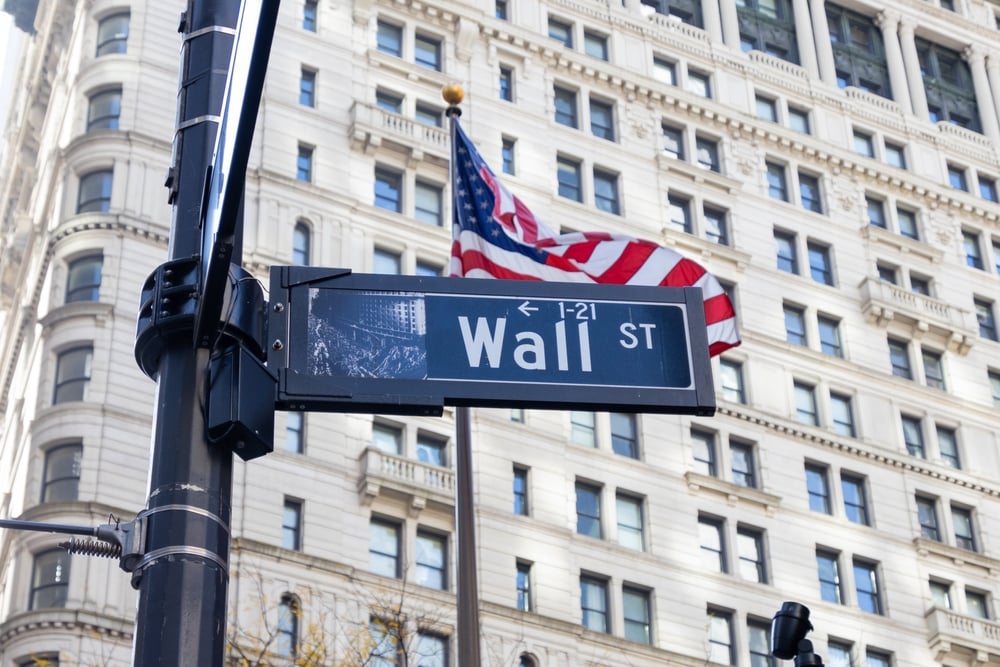
DraftKings faces growing skepticism on Wall Street over its nearly $1 billion prediction market investment, with three banks downgrading the sports betting operator following its disappointing third-quarter earnings.
JPMorgan, UBS and Stifel lowered their ratings for DraftKings to neutral or hold, questioning whether the spending will deliver the returns management expects amid legal and competitive uncertainty.
DraftKings shares plunged 21.3% Friday to a new 52-week low, following the company’s sharply reduced 2026 profit forecast. Its prediction market business is expected to generate $900 million to $1.05 billion in combined adjusted EBITDA losses through 2027.
DraftKings becomes a ‘show-me story’
Stifel analyst Jeffrey Stantial downgraded DraftKings to hold from buyand cut his price target to $21 from $32, calling it a “show-me story” that could take several quarters to regain investors’ confidence.
While calling the prediction market strategy “sound,” Stantial noted that DraftKings has missed its initial full-year guidance three consecutive years. Investors need to see sustained customer profitability, stable trading market share and greater regulatory clarity before assigning value to the new business, he wrote.
JPMorgan analyst Daniel Politzer also downgraded the stock from overweight to neutral, cutting his target to $21 from $30 and removing DraftKings from the bank’s Analyst Focus List. He said it was becoming “increasingly difficult to recommend the stock” given uncertainty over future profitability.
UBS analyst Robin Farley lowered her rating to neutral from buy and slashed her target to $22 from $48, questioning how much value investors can assign to prediction markets before their regulatory future is resolved.
Robins sees ‘win-win’ scenario
CEO Jason Robins has called it a “weird disconnect” that positive prediction market developments tend to hurt DraftKings shares while adverse court rulings lift them. At an October conference, he acknowledged that public investors “do not like uncertainty.”
DraftKings’ projections assume a potential Supreme Court ruling by mid-2028. Even if sports contracts are prohibited, the company expects its 2026 prediction market customers to have paid for themselves by then, with its 2027 cohort more than halfway there.
“Our recent performance reinforces our belief that we are in a win-win position no matter how any future court ruling plays out,” Robins said.
If sports contracts remain legal DraftKings expects customers acquired this year and next to generate more than $1 billion in gross profit in 2028. Otherwise, the company would plan to sharply reduce marketing while focussing on revenue from other products.
Promotions cloud prediction market returns
Deutsche Bank analyst Steven Pizzella maintained a hold rating and cut his price target to $22 from $28, questioning whether early trading will translate into lasting customers as promotions fade.
“Volume increasingly appears real; the debate is now what that volume is ultimately worth and how much stays with DKNG,” Pizzella wrote.
Stifel raised similar concerns, noting that California and Texas account for nearly half the exchange’s serviceable market. State restrictions, changes to market-making rules and escalating promotional competition could undermine expected returns, the firm warned.
Analysts question core DraftKings outlook
Wall Street’s concerns extend beyond prediction markets.
JPMorgan warned that DraftKings’ 2027 core earnings forecast implies roughly 75% incremental adjusted EBITDA flow-through, compared with a historical rate of 30% to 40%, leaving little room for weaker results or additional spending.
DraftKings also lowered its 2026 core adjusted EBITDA outlook by roughly $100 million, with Robins attributing 60% of the reduction to unfavorable sports results and the remainder to increased online casino customer acquisition.
Stifel questioned the company’s longer-term earnings trajectory after repeated guidance cuts.
Some analysts still see upside
Macquarie maintained its outperform rating, arguing that higher spending reflects stronger-than-expected customer acquisition rather than underlying weakness. Truist kept its Buy rating, even without assuming any return on the prediction market investment, though both firms lowered their price targets.
Citizens JMP analyst Jordan Bender compared the spending spree to the comapanys’ costly sportsbook expansion in 2022, when investors questioned customer acquisition returns before the business became profitable.
“This feels like that moment again,” Bender wrote, arguing that profits from earlier customer acquisitions could eventually outweigh continued investment.