The Commodity Futures Trading Commission sued Minnesota on Tuesday, hours after Gov. Tim Walz signed the nation’s first law banning certain prediction markets, escalating the growing jurisdictional fight over sports event contracts.
Minnesota’s new law, set to take effect Aug. 1, broadly prohibits operating or assisting in the operation of a prediction market, including platforms offering contracts tied to sports, elections, wars, terrorism, and other future events. The law includes carveouts for securities and certain traditional commodities products. The CFTC is seeking a preliminary injunction to block the law before it takes effect.
The core legal question may ultimately be decided by the U.S. Supreme Court, making the immediate practical impact uncertain. Still, Minnesota’s move could prove significant if courts eventually determine states, rather than the CFTC, have authority over sports event contracts.
Prediction markets legal fight grows
Prediction markets such as Kalshi and Polymarket have rapidly expanded sports offerings while arguing they operate under federal commodities law, not state gambling frameworks. State regulators and gaming officials across the country have argued the products function as unlicensed sports betting rather than legitimate derivatives trading.
Sports have become the dominant business line for prediction exchanges, accounting for roughly 85% of Kalshi’s business over the past year.
The CFTC has already sued multiple states over similar enforcement efforts while also filing amicus briefs in related appellate cases. A federal judge in Arizona recently granted a preliminary injunction blocking that state from pursuing criminal enforcement against prediction market operators. Separately, Kalshi has sued states that issued cease-and-desist orders or otherwise attempted to restrict access to its platform.
In its complaint, the CFTC called the law “the most aggressive move by a state to shut down CFTC-regulated markets and undermine the federal regulatory regime set up by Congress more than 50 years ago.”
MN lawmakers target sports, politics
Minnesota is the first state to enact a direct statutory ban on prediction markets rather than relying solely on regulatory enforcement or litigation.
Lawmakers specifically raised concerns about sports event contracts, election markets, and contracts tied to war, assassination, and other geopolitical outcomes during legislative debate. The proposal also raised concerns in Minnesota’s agricultural sector, where market participants have historically used commodities and weather-related products to hedge business risk.
Lawmakers ultimately narrowed parts of the bill, preserving traditional commodities trading and revising language around weather-related contracts. Even so, the CFTC argued the law would still improperly criminalize federally regulated products relied on by farmers and commercial participants.
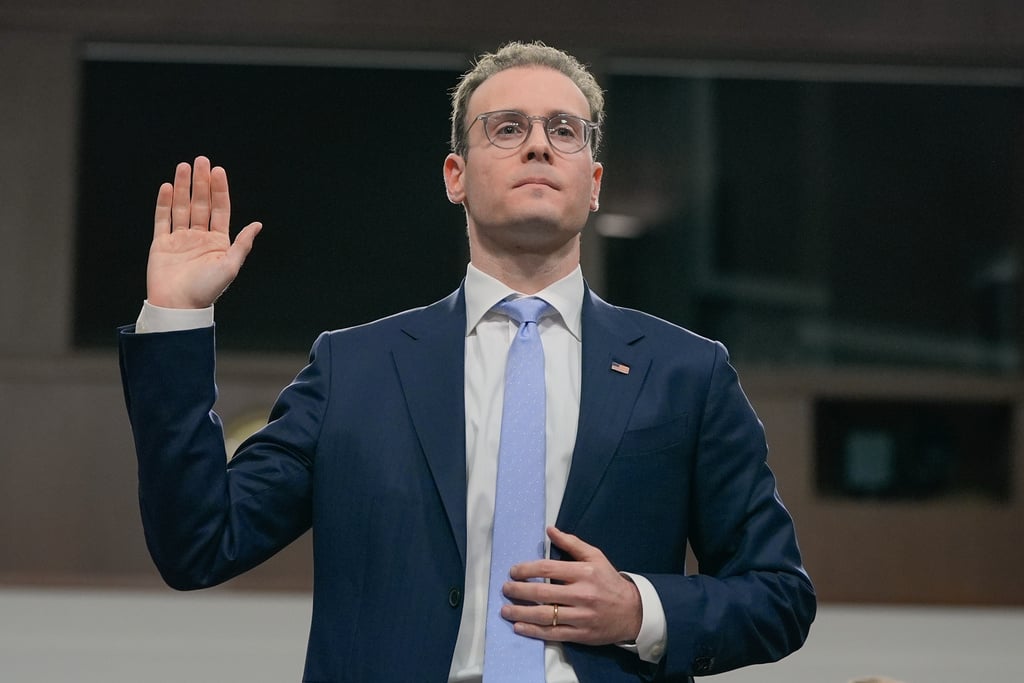
“This Minnesota law turns lawful operators and participants in prediction markets into felons overnight,” CFTC Chairman Michael S. Selig said in a statement. “Minnesota farmers have relied on critical hedging products on weather and crop-related events for decades to mitigate their risks. Governor Walz chose to put special interests first and American farmers and innovators last.”
Minnesota has not legalized statewide online sports betting.