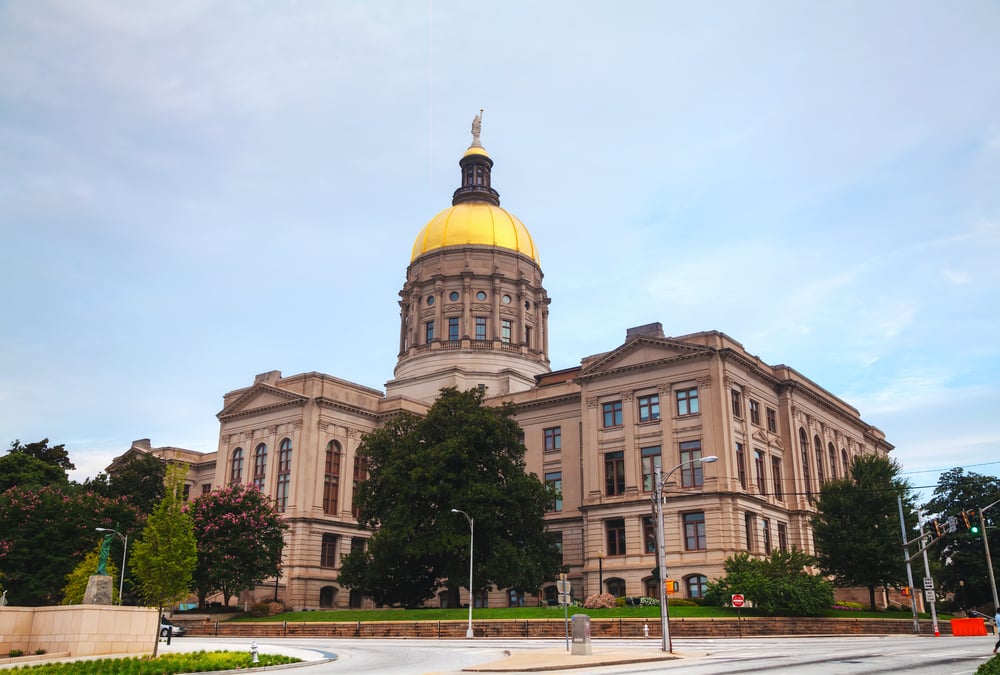
Legislation concerning sports betting in Georgia has fallen victim to politics before, but the pushback came from a surprising source this year.
Rep. Al Williams, a regular proponent of legalizing gambling in Georgia, the president-elect of the National Council of Legislators from Gaming States and a co-sponsor of HR 450, gave an impassioned speech against it on the House floor Friday night. The legislation failed to pass, 98-63.
Williams said he would not support the resolution that would have let voters decide whether to legalize sports betting in Georgia because the House Democrats had not been involved in the discussion of where tax dollars should go. An industry source close to the negotiations told LSR the bill had not changed since it was introduced in 2025 and that Williams had been involved in discussions since last year.
Williams’ office did not respond to requests for comment on Saturday.
The failure of HR 450 to pass before the cross over deadline does not completely kill all chances of legalizing sports betting in Georgia this year. Legalization language could be added to another bill that has already passed its first chamber. The legislative session ends April 2.
Williams: not voting yes because of pressure
Williams spoke for more than nine of the 15 minutes given to speak against the legislation by House Speaker Jon Burns. It was the first time sports betting legislation made it to the chamber floor after years of failed attempts.
“I have been for gaming for years and I don’t gamble but I know we need the revenue,” Williams said. “I don’t want to go home and say I voted yes because the pressure got too heavy. I ain’t crashing over this.
And I’ve been everything short of physically threatened. But you can’t threaten a person who laid on the floor to keep from getting shot by shotguns, how you going to threaten me? I’ve been there and done that.”
Williams framed discussions around the legislation as last minute, with talks starting Monday and getting “red hot” Friday. Both the resolution and HB 686, which laid out the framework for Georgia’s market, were reported favorably out of committee on Friday, the first movement of the year for either piece of legislation.
“All I’m saying is while it grieves me to a point, it also tells me that the conversation we’ve had in the last two hours was a conversation we needed to start having in January, where the needs of the minority caucus could be heard working with the majority caucus to come up with a workable plan.”
The proposal called for the vast majority of tax dollars to fund pre-kindergarten and other educational programs, similar to the Georgia Lottery’s HOPE scholarship program, with $22.5 million annually set aside for problem gambling programs as well. Williams said sports betting should also fund programs concerning infant mortality and funding for hospitals that were being “eaten alive” by the costs of emergency care.
Some Democrats seemingly fell in line
The votes to send the resolution to the Senate were likely there if Williams had not opposed the legislation, the industry source said. Georgia has failed to legalize sports betting for years but there has been increased interest in legalization with the emergence of sports predictions.
Rep. El-Mahdi Holly spoke during the vote to say while he had supported gambling over the last few cycles, he would be voting no this time out of respect for Williams.
Of the 82 House Democrats, 19 voted yes, 53 voted no and 10 were excused from voting.
Others against Georgia sports betting
Aside from Williams and those that followed him, sports betting opponents spoke out for multiple other reasons.
One popular talking point was on societal harms and how young men are impacted by sports betting. Rep. Leesa Hagan said she would always vote no on gambling but wanted to push back on this bill specifically because her sons asked her to.
“They have asked me to fight this because they have seen what it does to their friends,” Hagan said. “In high school, in college, their roommates, who are addicted to online sports gambling.”
Rep. Todd Jones called out the license structure in HB 686 that automatically gives licenses to professional sports organizations in the state.
“Respectfully, to our professional teams and, respectfully, to certain individuals that run golf tournaments, NASCAR and things like that,” Jones said. “Every day those organizations work to get into the playoffs and win their championships. Every day they compete against competing professional sports teams, but yet they want to tell us that they should have an automatic bid, not just into the playoffs but into the World Series, and into the Super Bowl.
“That’s not what we’re about. We weren’t elected to pick winners and losers.”
Supporters want Georgia sports betting regulated
The majority of those who spoke in support of legal sports betting in Georgia want to see it taxed and regulated so it will tax keep dollars in state and prevent those under 21 from accessing it.
Rep. Bethany Ballard said her sons were surprised to hear that sports betting in Georgia is not legal because so many access offshore sportsbooks. Ballard said she was able to create accounts and could have bet with offshore betting sites using a Georgia address and a 2010 birthdate.
“Y’all, lets just get this done,” Ballard said in closing.
Others, like Rep. Beth Camp, said her support of the resolution had nothing to do with sports betting.
“This measure has nothing to do with whether I like gambling or not,” Camp said. “It has to do with whether we support the people in Georgia to have the opportunity to vote yes or no on this measure.”
SBA: offshores thrive without legal betting
The Sports Betting Alliance, which represents bet365, BetMGM, DraftKings, Fanatics and FanDuel, issued a statement following the failed vote.
“The absence of legal sports betting legislation in Georgia will not eliminate the practice within the state’s borders. Georgians are already participating in sports wagering through various channels — including illegal offshore sportsbooks, federally regulated prediction markets, and by traveling to neighboring states to place legal bets. Indeed, this trend is only accelerating.
“Representative [Matt] Reeves and other leaders deserve recognition for acknowledging a critical reality: every year Georgia delays the legalization of sports betting is another year the state forgoes meaningful revenue that could otherwise be directed toward Pre-K education and essential harm reduction programs.
“Friday night was the first time sports betting enabling legislation has been debated in the House of Representatives, and it is clear Members want to continue this conversation and ensure the legalization of gambling in Georgia is done right. The Sports Betting Alliance looks forward to continuing to have that discussion.”
Proposed Georgia sports betting details
There would be 16 sports betting licenses available in Georgia under HB 686. Eight of the licenses would be given to professional sports organizations, seven would be available through a competitive bid and one would be for the Georgia Lottery.
The state would tax sports betting adjusted gross income at 27.5%. The market would launch no later than July 31, 2027.
College prop bets would be banned.
The bill would only become law if voters approved the constitutional amendment this November.