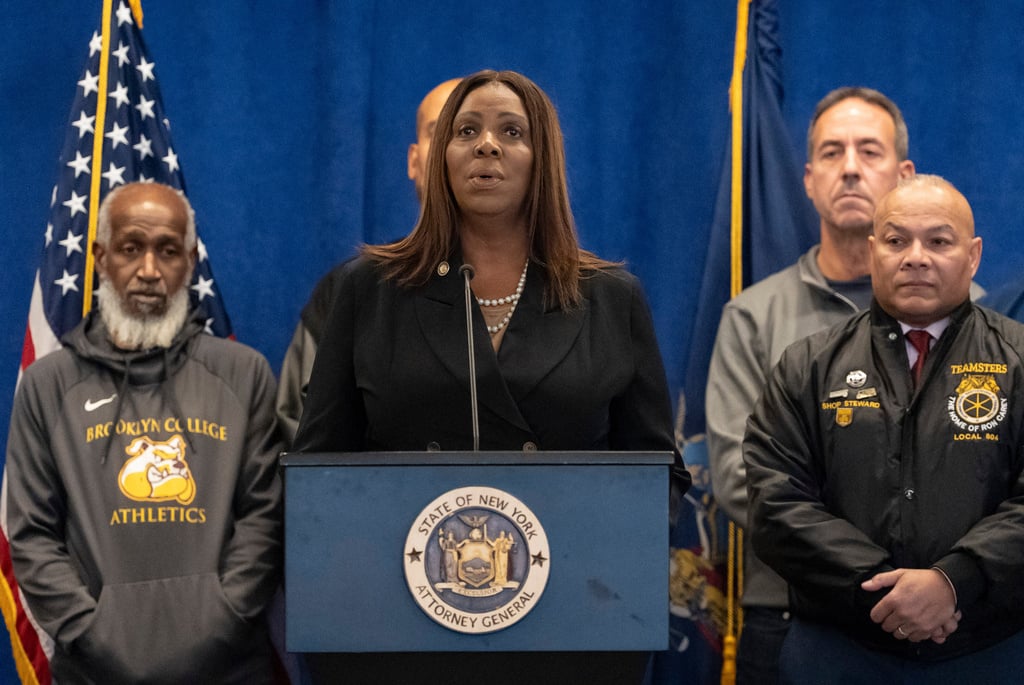
New York Atty. Gen. Letitia James is warning constituents about prediction markets that “masquerade” as federally regulated event contracts to operate outside NY sports betting laws and consumer protections.
In a consumer alert issued Monday ahead of the Super Bowl, James said prediction markets offering wagers on sports, elections and other outcomes are not overseen by the New York Gaming Commission and lack safeguards required of licensed NY sports betting operators.
“Ahead of the Super Bowl, New Yorkers need to know the significant risks with unregulated prediction markets,” James said. “It’s crystal clear: so-called prediction markets do not have the same consumer protections as regulated platforms. I urge all New Yorkers to be cautious of these platforms to protect their money.”
Prediction markets under fire
The warning comes amid multiple state lawsuits and enforcement actions challenging sports-related event contracts offered by platforms such as Kalshi, Polymarket, Crypto.com and Robinhood. Those challenges have escalated over the past year as sports contracts have become the dominant driver of prediction market activity, now accounting for over 90% of Kalshi’s volume.
State regulators contend the contracts mirror traditional sports betting on game outcomes while bypassing licensing, tax and consumer protection requirements. Operators, meanwhile, maintain the products are federally regulated derivatives that fall under the jurisdiction of the Commodity Futures Trading Commission, not state gaming agencies.
Federal response coming
The warning lands as CFTC Chair Michael Selig recently said the agency plans to issue new rules and guidance for prediction markets and sports-related event contracts.
Selig has also pledged to defend the federal framework in court, setting up a continued clash between state gaming regulators and federal derivatives oversight as prediction markets push deeper into sports.
NY sports betting protections flaunted
James emphasized that licensed New York sportsbooks operate under some of the strictest regulations in the country, including mandatory funding for problem gambling programs, age restrictions, advertising restrictions and required responsible gaming tools such as self-exclusion tools and deposit limits.
Under state law, sportsbooks may only accept wagers from customers 21 and older and are subject to ongoing integrity monitoring and financial oversight by the New York Gaming Commission.
Prediction markets, James said, are not held to those standards, even as many now offer sports-related contracts that resemble traditional wagers. The platforms also fall outside New York’s 51% tax on mobile sports betting revenue, one of the highest in the nation, the bulk of which goes to state education.
The alert mirrors language New York and other states have used in warnings about offshore sportsbooks and, more recently, sweepstakes-style betting platforms that regulators say attempt to sidestep state gaming laws.