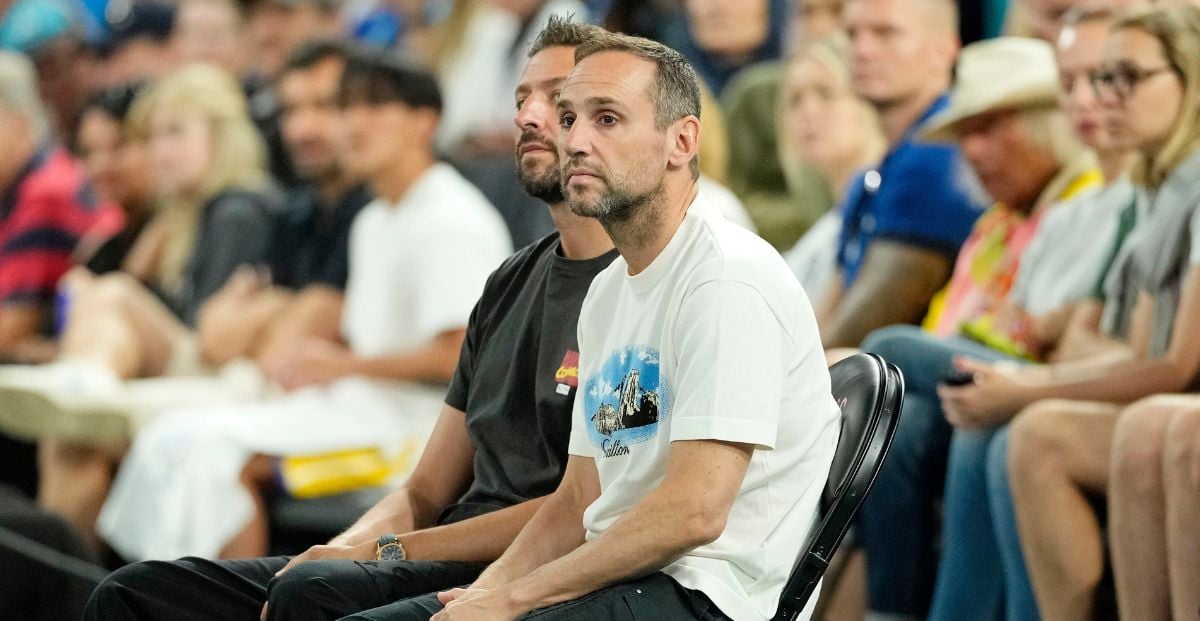
Fanatics is preparing to nearly triple its betting and gaming advertising budget next year, with CEO Michael Rubin telling Bloomberg the company could spend as much as $1 billion in 2027 to chase DraftKings and FanDuel.
Rubin said that Fanatics is a distant third behind the two market leaders. His answer to closing that gap is spending.
“We’re going to spend a lot more money in marketing next year than we had thought we were going to spend because we’re saying how do we close the gap, and how do we really grow our market share,” he told Bloomberg.
Fanatics, like DraftKings and FanDuel, has entered the prediction markets space with Fanatics Markets, which has given the operator more incentive to go all in. Other predictions opeators including Kalshi, Polymarket and Novig have also stepped up marketing campaigns ahead of the NFL season.
Spending onslaught to come
Since Fanatics is privately owned, Rubin has the luxury of using revenue from other divisions to pour into the gaming side without shareholder pressure that publicly traded DraftKings and FanDuel parent Flutter face.
Rubin said that Fanatics will spend $350 million in marketing this year. The plan is to raise that to $800 million, or even $1 billion, in 2027.
“The betting and gaming business will be more complicated in 2027 because you not only have the addition of Kalshi and Polymarket, but now you have the addition of Fanatics spending at the same level as FanDuel and DraftKings,” Rubin said.
The company expects to generate $2 billion in free cash flow this year and has about $1 billion in net cash and no debt, according to Bloomberg.
‘Sports betting’ in CA, FL, GA and TX
Fanatics Sportsbook is available in 23 states while Fanatics Casino operates in four states.
Rubin said that revenue “has hit a wall” in regulated states such as Pennsylvania, New Jersey and New York. In addition, new states have been slower to legalize. Sports betting is legal in 39 states and Washington, D.C., but there are only seven states with legal online casinos with the eighth state, Maine, pending launch.
Prediction markets have given Fanatics a way into states where it cannot offer its sportsbook, such as California, Florida, Georgia and Texas. The company took advantage by launching Fanatics Markets last December.
“If we would have sat here a year ago and said what’s the chance of sports betting in California, Texas, Florida and Georgia, you’d say no chance,” Rubin said. “And here we are a year later, and we have it. So obviously, that’s a great opportunity for us.”
Technicalities matter
Of course, Fanatics is not technically offering sports betting in any of those states.
Sports event contracts on prediction markets are regulated by the Commodity Futures Trading Commission, not licensed or taxed by the states. California, Texas and Georgia still don’t have legal sports betting, and Florida’s market belongs to Hard Rock Bet.
Lawmakers took another swing at Georgia sports betting this year, but HR 450 failed on the House floor 63-98, well short of the 120 votes needed.
Whether sports event contracts are treated as sports betting will eventually be decided by the U.S. Supreme Court.
Building customer loyalty
Rubin and Fanatics have been keen on making the experience better for customers. Part of that was introducing FanCash, a currency that bettors can build by using Fanatics’ platform.
Customers can redeem rewards through team merchandise, trading cards, wagers and get tickets to games. Rubin said that more than $1 billion in FanCash will be distributed this year.
In addition, Fanatics established Fair Play, which provides insurance to customers that voids prop bets for players leaving a game early because of injury. While not part of Fanatics Fair Play, the operator decided to refund Trevor Lawrence Anytime TD props, since the Jaguars’ QB deliberately kneeled down before reaching the end zone in the team’s win against the Patriots last Sunday.
“Everything we do, we want to do better for fans, and we weren’t necessarily born that way,” Rubin said. “When you start a business, you think about how do you grow the business? Then four or five years ago, we developed a brand purpose, which is to relentlessly enhance the fan experience. And we won’t get into a business now if we think we can’t make it significantly better for fans.”
Rubin says that Fanatics has acquired 10% market share in the betting business in just three years, crediting his loyal customers.
“We did it better than what other companies were doing,” he said. “We made it better than DraftKings, better than FanDuel.”