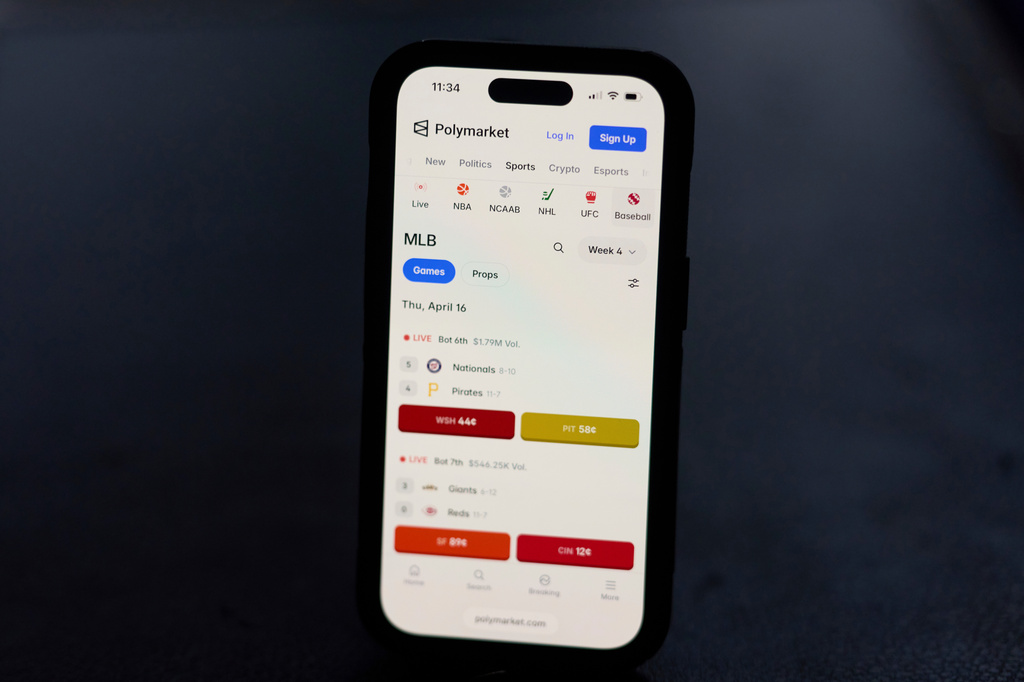
Polymarket has moved to add parlay-style sports contracts to its U.S. exchange, filing with the Commodity Futures Trading Commission to self-certify a multi-leg product.
Polymarket’s federally regulated U.S. exchange seeks to list what it calls Combinatoric Athletic Outcome Contracts, or CAOCs, no earlier than Thursday, according to the filing, which was first reported by Sportico.
It defines the product as the “joint Settlement Amount of two or more underlying Contracts,” with each underlying event “referred to as a leg.”
How Polymarket parlays would work
The filing states CAOCs would require every leg to hit for the contract to pay out, mirroring the all-or-nothing structure of a traditional parlay.
Parlays typically generate higher hold than straight wagers, making them among sportsbooks’ most profitable products.
The filing states that CAOCs would carry no position limits, a $25,000 position accountability threshold, and would be unavailable to users under 18. It includes eligibility restrictions barring certain participants from trading, including current and former professional athletes, coaches, team staff, event employees, and immediate family members.
Kalshi calls them combos
Polymarket rival Kalshi debuted its own parlay-style product, branded as “combos,” late last year.
Kalshi has handled more than $83 billion in trading volume since launching sports event contracts in early 2025, with more than 85% tied to sports rather than other markets such as politics, entertainment, economics, weather, or cryptocurrency prices.
Polymarket returned to the U.S. earlier this year after acquiring a CFTC-regulated exchange and clearinghouse, years after a 2022 CFTC settlement forced the company to stop offering unregistered event contracts to American users.
Polymarket expands amid regulatory scrutiny
More than 20 lawsuits and cease-and-desist actions have targeted prediction market operators as states, tribal gaming groups, and sportsbooks argue they function as unlicensed sports betting outside traditional state law. Minnesota recently passed a law aimed at banning certain prediction markets, prompting a federal lawsuit from the CFTC.
Kalshi and Polymarket have maintain their offerings are federally regulated derivatives overseen by the CFTC. Meanwhile, lawmakers in Congress have begun weighing legislation around event contracts amid concerns over market integrity, insider trading, and regulatory oversight.