Two nominees to the Commodity Futures Trading Commission faced questions Tuesday over the legality of sports prediction markets and the efforts by the CFTC to defend them against state gambling regulators.
Neither Nathan Anonick, a Republican, nor Matthew Rowland, a Democrat, would say whether trading on the outcome of a sporting event through a prediction market constitutes gambling and should be regulated like sports betting. Rowland expressed sympathy for states and tribes challenging the industry, while Anonick pointed to conflicting federal court rulings.
That question is at the heart of lawsuits across the country over the CFTC’s claim of exclusive authority over sports event contracts. The agency’s support under the Trump administration has helped prediction markets like Kalshi and Polymarket expand nationwide, sending company valuations soaring and pushing traditional sportsbooks like DraftKings and FanDuel to launch competing prediction market businesses.
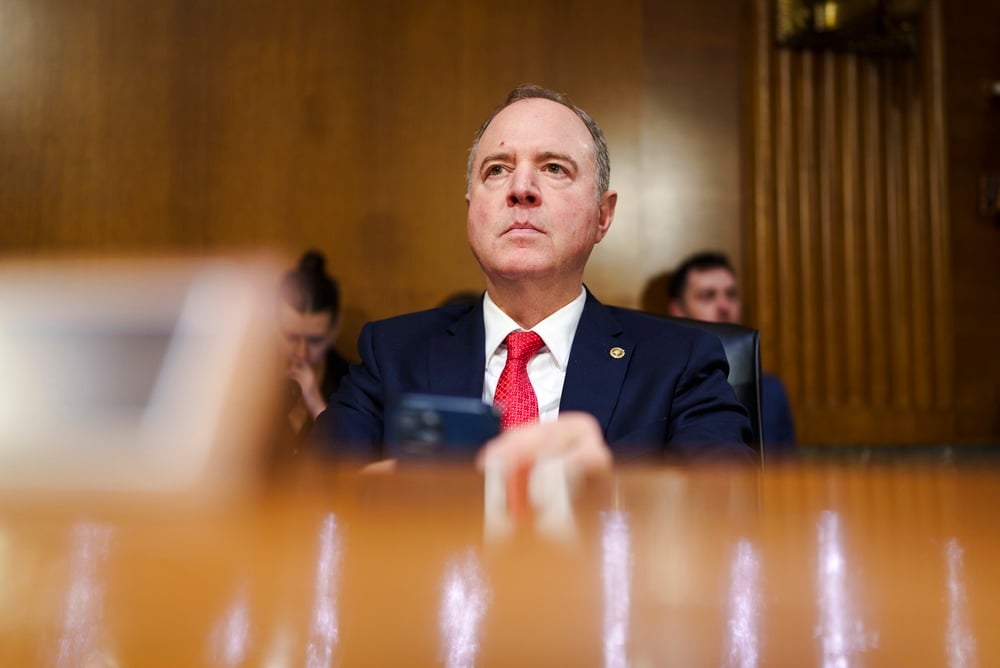
The Senate Agriculture Committee hearing also featured sharp criticism of CFTC Chairman Michael Selig, whom Sen. Adam Schiff (D-CA) accused of misleading Congress about his approach to sports prediction markets. The committee took no vote on either nominee, leaving their nominations pending as the Senate considers whether to confirm them before the end of the year.
CFTC nominee quotes on sports contracts
Sen. Tina Smith (D-MN) pressed both nominees on whether there is any practical difference between a sports wager and a sports event contract.
“Senator, I can say that I know that there have been courts that have held both ways on this issue,” Rowland said. “I think as a matter of just pure practicality, I understand the argument you’re making. I think that going to the heart of the legal issue, it’s hard for me to comment on the active litigation that the CFTC is engaged in, but I’m certainly very sympathetic to the concerns that the states and tribes have raised and would kind of want to work with them further if I were confirmed on that.”
Anonick was similarly reluctant to take a position when Schiff asked whether trading on the outcome of Thursday‘s NFL game between the Colts and Texans constituted sports betting.
“I agree with my colleague. It’s a complex legal question, such that federal courts have disagreed on that. So, from a legal perspective, I wouldn’t want to tip the scales on that, but I appreciate your practical examples, and I agree with my friend Matt in that I’ve heard from the tribes as well. It’s a very charged, emotional issue. And I appreciate how sensitive it is,” Anonick said.
Asked how he would approach the issue as commissioner, Anonick said he would consult attorneys, states, tribes and other stakeholders.
“I don’t have a preconceived position because it would be irresponsible of me to make that position until I’ve gone through that process,” Anonick said.
Schiff calls out Selig
Schiff used the hearing to revisit Selig’s own confirmation testimony last year, when he repeatedly promised to look to the courts to determine whether sports event contracts constitute gambling.
Since taking office, Selig has taken an active role in defending the CFTC’s claimed exclusive jurisdiction through lawsuits against states and legal filings supporting prediction market operators.
“I don’t know whether he was just lying to us or once he was confirmed he had some kind of an epiphany, but he has been anything but a blank slate,” Schiff said. “He has not looked to the courts. He’s filed briefs to tell the courts what to do.”
Schiff also accused Selig of encouraging prediction market operators to defy court orders through a Nov. 5 directive requiring exchanges to lift certain geographic restrictions within 30 days.
“And when the courts have ruled in a way that doesn’t favor the prediction markets, he has basically told companies to ignore the courts, ignore court orders, don’t geofence, don’t respect state or tribal laws,” Schiff said. “Anything but a blank slate. I don’t know that I’ve ever been so blatantly deceived by a nominee before.”
Schiff and eight other Democratic senators sent Selig a letter Monday demanding that he reverse the directive.
CFTC staffing, enforcement questioned
Lawmakers also raised concerns about staffing cuts and reduced enforcement activity at the agency as its responsibilities expand to include more retail traders and prediction markets.
Rowland, a longtime CFTC employee, called for rebuilding the agency’s enforcement program and restoring staffing levels. Anonick said he would review the agency’s staffing levels and identify areas needing additional resources or expertise if confirmed.
Trump nominated Anonick and Rowland nine days after Democrats won control of Congress in the midterm elections and nearly two years into his second term, during which most of the CFTC’s five commissioner seats have remained vacant.
Federal law allows no more than three commissioners from the same political party. If confirmed, Anonick and Rowland would restore bipartisan representation to the commission for the first time under Selig, who has served as its sole commissioner since December 2025.