
Prediction Markets vs. Daily Fantasy Sports: Which One Fits You Better in September 2026?
If you love sports and want to add some stakes to the games you watch, you’ve probably come across two options that keep popping up: prediction markets and daily fantasy sports. Both let you put money behind your opinions, but the way you actually do that is pretty different. One is about trading contracts on outcomes, and the other is about building lineups or picking players.
This guide breaks down how each one works, what it costs, how you get paid, and which one might make more sense for the kind of experience you’re looking for.
Prediction Markets vs. Daily Fantasy Sports: Quick Comparison
| Feature | Prediction Markets | DFS Sites |
|---|---|---|
| How it works | Buy and sell contracts tied to event outcomes | Build lineups or make player picks |
| Who regulates it | CFTC (federal) | State by state |
| Typical payment methods | Bank transfer, debit card, crypto, PayPal | Debit card, PayPal, Venmo, Apple Pay |
| Can you exit early | Often yes, you can sell your position | Usually no, once you’re in a contest you’re locked in |
| Best for | People who like tracking probabilities and outcomes | People who like building rosters and competing on player performance |
What Are Prediction Markets?
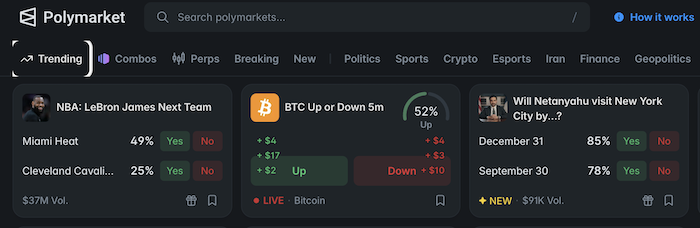
Prediction market apps are places where people trade contracts based on what they think will happen in a future event. Think of it a bit like a stock market, except instead of trading shares in a company, you’re trading shares in an outcome, like whether a certain team wins a game or a series.
Sites like Polymarket, ProphetX, and OG let users buy “yes” or “no” positions on all kinds of events, and sports are one of the biggest categories. The price of a contract usually moves between 1 cent and 99 cents, and it reflects what the crowd currently believes will happen.
How Contracts and Pricing Work
Let’s say there’s a contract asking whether a certain team will win their next game. If most people think they will, the price on “yes” might sit around 70 cents. If you buy that contract and you’re right, you get paid $1 per contract. If you’re wrong, the contract is worth nothing.
So if you bought 10 contracts at 70 cents each, you’d spend $7, and if the outcome hits, you’d collect $10. That $3 difference is your profit.
How People Actually Win Money
There are really two ways to make money on a prediction market. The first is simply holding your position until the event finishes and hoping you picked the right side. The second is trading in and out before the event ends, buying low and selling high as the price shifts with new information.
That second option is where prediction markets start to feel less like traditional betting and more like short-term trading. Some users never even wait for a game to end. They watch the price move and cash out early if it swings in their favor.
What Is Daily Fantasy Sports?
Daily fantasy sports, or DFS, has been around a lot longer than most prediction markets, and most people already have a rough idea of how it works. You pick real athletes, build a roster, and your success depends on how those players actually perform in real games.
It’s worth pointing out that DFS is not sports betting, even though it lives in the same general space. You’re not wagering on a game’s final score or outcome; you’re competing based on statistical performance, which is legally and structurally a different product. That’s different from prediction markets, which aren’t tied to sports specifically and can cover almost any real-world event.
DraftKings is probably the name most casual fans recognize, but Sleeper, ParlayPlay, and others carved out their own space in the DFS world, often with slightly different formats than the classic salary cap style.
Classic Salary Cap Lineups
This is the format that made DFS popular in the first place. You’re given a set budget, usually somewhere around $50,000, and every player has a price tag based on how good they’re expected to be that day. You build a full roster within that budget and then compete against other entries in the same contest.
Pick’em Style Contests
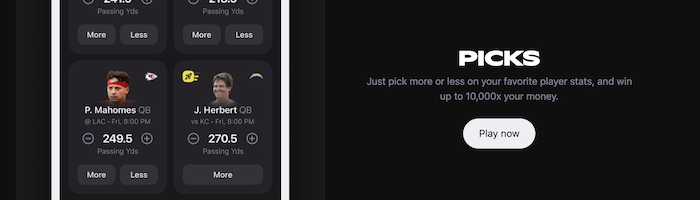
A newer and simpler style of DFS has taken off in recent years, offered by platforms like Sleeper and ParlayPlay. Instead of managing a full budget and roster, you just pick whether a player will go over or under a certain stat line, like points, yards, or rebounds. Get enough of your picks right, and you win a payout based on how many you nailed.
How People Actually Win Money
In salary cap contests, the goal is to build a roster that scores more points than most of the other lineups entered. That means finding a mix of star players and cheaper, less popular options that end up outperforming their price tag.
In pick’em style contests, it’s more straightforward. You’re graded on how many of your picks hit, and most platforms pay out once you clear a certain threshold, like getting 3 out of 5 or 4 out of 6 correct.
Key Differences Between Prediction Markets and DFS
Once you understand how each one works on its own, the differences start to stand out pretty clearly.
- What You’re Actually Betting On: With a prediction market, you’re betting on an outcome, plain and simple. Will this team win? Will this event happen? With DFS, you’re betting on individual player performance, which adds a layer of strategy around roster construction that prediction markets don’t really have.
- Skill vs. Probability: Prediction markets lean more on reading probability and sentiment. You’re trying to figure out if the current price makes sense given what you know. DFS leans more on research and roster-building skill, especially in salary cap formats where there’s a real edge for players who study matchups closely.
- Regulation and Legal Status: Prediction markets are treated as financial products and fall under the Commodity Futures Trading Commission, which is a federal regulator. That’s part of why platforms like Polymarket and ProphetX can operate in states where traditional sports betting isn’t legal yet. DFS, on the other hand, is regulated at the state level, so availability can vary depending on where you live. DraftKings and similar platforms have to follow different rules in different states.
Contest and Market Variety
Prediction markets and Daily Fantasy Sites have a variety of markets and contests to wager and trade on:
- Prediction Market Categories: Beyond sports, prediction markets often let you trade on politics, economic data, entertainment, and other current events. Within sports specifically, markets are usually built around game winners, series outcomes, or season-long results rather than individual player stats.
- DFS Contest Types: DFS platforms typically offer a wider range of sports contest formats. You’ll find cash games with more modest but consistent payouts, large-field tournaments with big prizes for the top finishers, single-entry contests that limit how many lineups one person can submit, and head-to-head matchups against a single opponent.
Costs, Fees, and Rake
Neither option is free to use, but the way each one pulls money from you looks pretty different once you break it down.
How Prediction Markets Charge You
Most prediction markets charge fees tied to trading activity. That can include a small percentage on deposits, a fee per contract you buy or sell, and sometimes a spread if a market doesn’t have a lot of trading volume. These fees are usually pretty small individually, but they add up if you’re trading often.
How DFS Platforms Make Money
DFS sites work differently. There’s no fee when you deposit or withdraw. Instead, the platform takes a cut, often called the rake, out of the total prize pool in a contest. If a tournament collects $100,000 in entries, the platform might pay out $90,000 and keep $10,000 for hosting it. You never see this fee directly, but it’s baked into how much of the pool actually gets returned to players.
Getting Started: Sign-Up and Verification
Getting an account open is usually the easy part, but how long it takes and what you need to provide varies quite a bit between the two.
Opening a Prediction Market Account
Signing up for a prediction market usually takes a bit longer than a typical DFS site. Most require identity verification, which means uploading a government ID and sometimes taking a selfie to confirm it’s really you. This is standard across platforms like Polymarket and OG, and it can take anywhere from a few minutes to a couple of days depending on the platform.
Opening a DFS Account
DFS sign-ups tend to move faster. You’ll still provide some personal information since winnings count as taxable income, but the verification process is generally lighter than what you’ll find on a prediction market. Once your account is set up, you can deposit and jump into a contest almost right away.
Withdrawals, Payment Methods, and Wallets
Prediction markets often support both crypto and traditional payment methods, and some require you to manage a wallet, whether that’s built into the platform or an external crypto wallet you connect. Withdrawal times vary quite a bit depending on the method, ranging from a few minutes to several business days.
DFS platforms mostly stick to standard payment methods like debit cards, PayPal, and Venmo, with funds held in an account balance rather than a wallet. Withdrawals are typically processed within a few business days, though some platforms offer faster options.
Flexibility: Can You Exit Early?
This is one of the biggest practical differences between the two. On most prediction markets, you can sell your position at any point before the event resolves. If you bought into a contract and the price moves in your favor early, you can lock in profit and walk away without waiting for the final result.
DFS doesn’t offer that option. Once you submit a lineup or lock in your picks, you’re in until the contest finishes. There’s no selling out of a bad lineup halfway through the week.
Customer Support Experience
Prediction markets tend to rely heavily on FAQ pages and chatbots for support, with live chat sometimes reserved for issues the bot can’t resolve. Response times are usually quick, though getting a human on the line can occasionally take longer.
DFS platforms lean a little more toward traditional support options like email and live chat, and some, including DraftKings, offer the option to request a callback from a support representative.
Security and Fund Protection
Both types of platforms use account protections like two-factor authentication, and many now offer facial recognition or authentication apps as an added layer. The bigger distinction is in how funds are held. Prediction markets can be custodial or non-custodial, meaning you might hold your own funds in a connected crypto wallet rather than leaving them with the platform. DFS platforms are custodial across the board, meaning the site holds your balance for you.
No platform is immune to security issues. Large sites in both categories have dealt with breaches or unauthorized account access in the past, so it’s worth using strong passwords and enabling extra security features wherever they’re offered.
Here’s the rewritten section with a line before every heading and before each list:
Pros and Cons of Prediction Markets
Here’s a quick breakdown of where prediction markets shine and where they fall a little short.
Pros
Prediction markets offer a few real advantages, especially if you like having more control over your position.
- You can exit a position early instead of waiting it out
- Markets exist well beyond sports, covering politics, economics, and more
- Pricing gives you a clear read on what the crowd expects
Cons
That said, there are a few tradeoffs worth keeping in mind before you dive in.
- Trading fees can add up with frequent activity
- Sports markets aren’t available in every state
- Verification can take longer to complete
Pros and Cons of Daily Fantasy Sports
DFS has its own set of strengths and weaknesses that are worth weighing before you jump in.
Pros
There’s a lot to like about DFS, especially if you’re already comfortable with sports stats and matchups.
- Widely available across most states
- No direct fees on deposits or trades
- Big payout potential in large tournaments
- Fast, simple sign-up process
Cons
On the flip side, there are a few things that can make DFS tougher for newer players.
- Extremely competitive at the higher stakes levels
- No way to exit a contest once you’ve entered
- Requires more research to compete with experienced players
Prediction Markets vs. DFS: Which One Should You Choose?
There’s no universal right answer here since the two serve different interests. If you like tracking probability, want the option to cash out early, and enjoy following outcomes beyond just sports, a prediction market is probably the better fit. Platforms like Polymarket, ProphetX, and OG are good starting points if you want to explore that side.
If you’d rather build a roster, dig into player matchups, and compete against friends or big fields of other players for a shot at a large prize, DFS is likely more your speed. DraftKings remains the biggest name in the space, while Sleeper, ParlayPlay, and others offer simpler pick’em style formats if you want something a little more casual to start with.