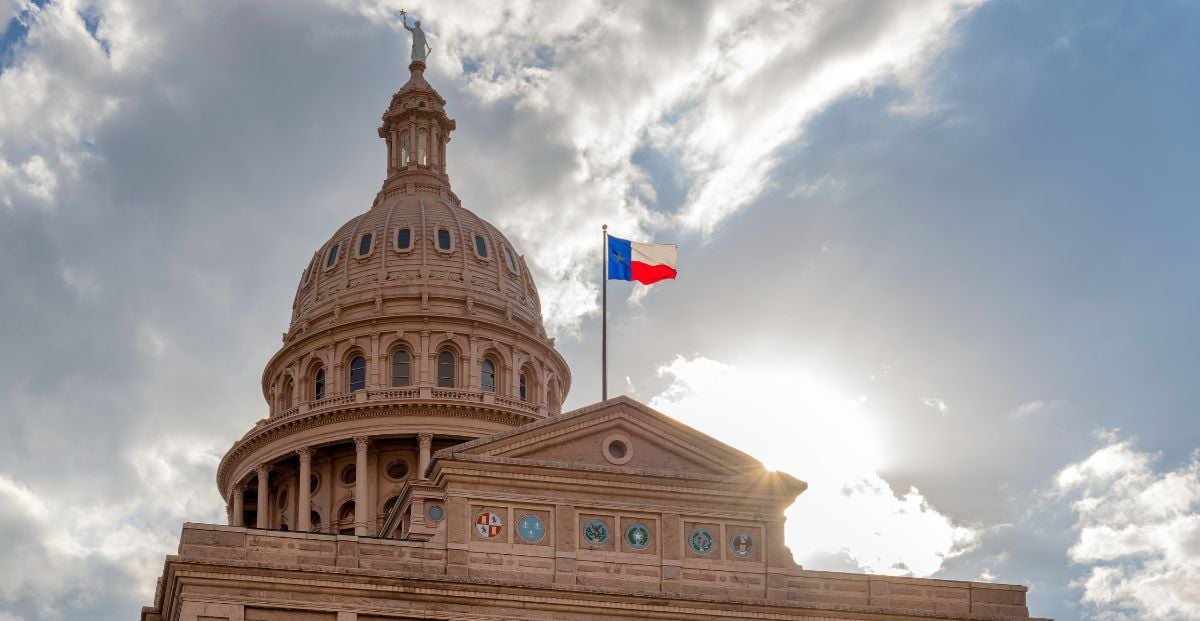
Texas gambling bills may have a path to the Senate floor for the first time in a decade after Democrat Vikki Goodwin unseated Lt. Gov. Dan Patrick on Tuesday.
Patrick, who has served as lieutenant governor since 2015, has staunchly opposed legalized gambling in Texas. Earlier this year, he also directed a Senate committee to study prediction markets, whose sports event contracts closely resemble sports betting.
Goodwin has a much more favorable stance on gambling. She wants the decision left to Texans, she wrote on her campaign website.
“I think we should let the people of Texas have a say in this decision through the democratic process, as they are the ones who should ultimately determine what’s best for our state’s future,” she wrote.
Her win does not legalize anything on its own. Any gambling expansion in Texas requires a constitutional amendment, which needs two-thirds support in both chambers before it goes to voters.
With a Republican no longer in the position, the Texas Senate Republicans are reportedly meeting to discuss stripping legislative powers from the newly appointed lieutenant governor.
Goodwin makes the economic case for a vote
As lieutenant governor, Goodwin will preside over the Texas Senate, appoint committee chairs and decide which bills reach the floor, the same powers Patrick used to keep gambling legislation from ever getting a vote.
While she wants voters to make the final call, Goodwin also makes the economic case for expansion.
“Right now people leave, and take their dollars with them, to go to nearby states where they can gamble, which means Texas is losing out on potential revenue and economic activity,” she wrote. “This represents a significant economic opportunity that could benefit our state through job creation, tourism, and tax revenue if properly regulated.”
Putting the question to voters doesn’t guarantee a win for the industry. Nebraska voters rejected online sports betting on Tuesday, though that measure reached the ballot through a citizen petition. Texas has no such process, meaning any gambling vote would first need lawmakers’ approval.
Democrats swept other key races in Texas. James Talarico defeated Atty. Gen. Ken Paxton for U.S. Senate. Talarico voted for a 2023 constitution amendment that would have let Texans decide on casinos and sports betting. Talarico’s spokesperson Antonio Esparza said in Aug. 2025 that Talarico has supported casino expansion “his entire career” because it “will bring good jobs and additional tax revenue” to Texas, according to Politico.
Gina Hinojosa defeated incumbent Greg Abbott in the governor’s race. The former state representative voted against the 2023 resolution.
Gambling long off the table in Texas
Texas lawmakers have pushed to expand gambling in recent sessions, but those efforts have repeatedly stalled at the top of state government, most consistently with Patrick.
Along with the 2023 constitutional amendment, HB 1942 also passed the House, but Patrick ruled it dead, saying “there is little to no support for expanding gaming from Senate GOP.”
In 2025, gambling bills were declared “dead on arrival” after a new group of House Republicans pledged to oppose “any attempt to expand gambling” that session.
The outgoing Abbott has wavered on the issue. He said in early 2025 that he didn’t have a problem with online sports betting, but later reversed course, saying he’s “simply not there yet” on legalizing casinos or sportsbooks.
Prediction markets still loom
Texas’ outgoing statewide leaders have been split on prediction markets operating in the state.
Paxton has stayed quiet on the platforms. Politico reported that Paxton accepted $12,000 from Kalshi, and Texas has so far not joined any coalition against prediction markets or filed litigation, unlike many other states.
Patrick, on the other hand, has treated them as gambling. His interim charge directed the Senate to examine how the platforms use federal law to get around the state’s gambling ban.
“Study the sudden inundation of prediction market gambling and exploitation of federal law to circumvent Texas gambling prohibitions by allowing users to place bets on the outcome of elections and other events,” the directive reads. “Examine the relationship between federally regulated derivative markets and state-prohibited gambling.”
Lawmakers at House and Senate hearings in September largely treated prediction markets as betting. Sen. Bob Hall wants to draft legislation that would ban prediction markets from offering sports event contracts in Texas.
“They’re just dressed up differently,” Hall said, comparing the prediction markets to a sportsbook. “They’re different costumes on gambling is what it is. Wearing a different costume to the ball. Some have high heels and a tiara and others have on miniskirts or a bikini.”
The incoming leadership will inherit that fight. Goodwin takes over the Senate that conducted Patrick’s study, Hinojosa would sign or veto any state ban, and Talarico will have a vote in Washington, where the larger battle over federal oversight of prediction markets is playing out.