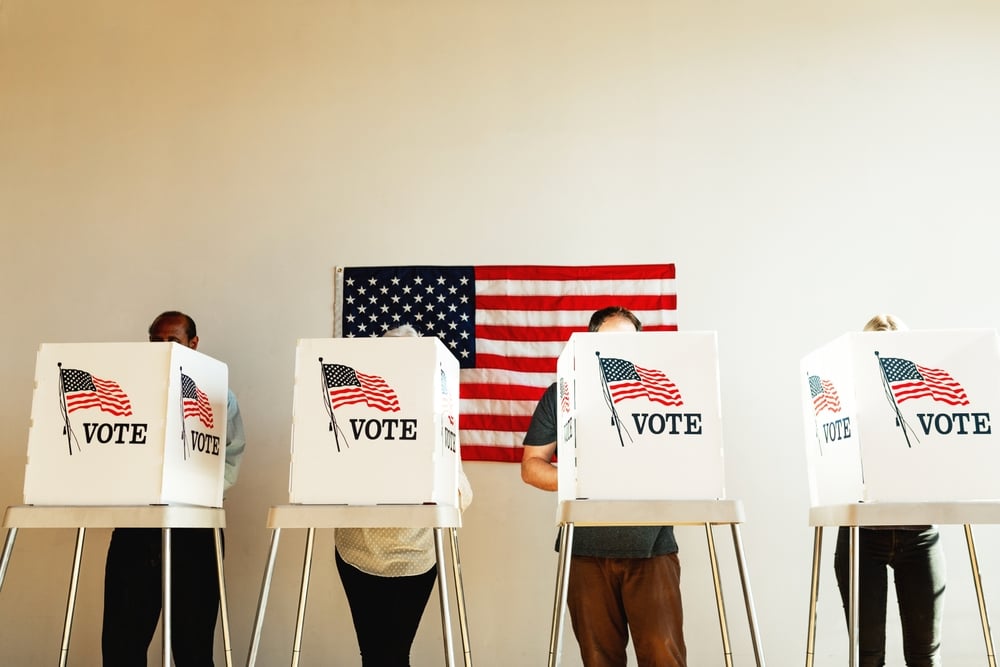
Most Americans oppose using prediction markets to bet on U.S. elections, according to a new Reuters/Ipsos poll released weeks before the midterms.
The poll, conducted Sept. 30 through Oct. 5, found 69% of Democrats and 61% of Republicans opposed betting on election results through prediction markets. Ipsos surveyed 4,506 U.S. adults online, with a margin of error of about two percentage points.
Even sports betting drew more opposition than support, at 43% to 29%, though Reuters did not specify whether that question covered regulated sportsbooks, prediction markets or both.
Prediction markets have expanded well beyond elections into sports, government actions and other real-world events, putting the industry at the center of a jurisdictional fight between the Commodity Futures Trading Commission and state regulators.
Legal experts expect that dispute to reach the U.S. Supreme Court.
Insider trading cases fuel concerns
Policymakers have raised concerns that markets on elections and other real-world events could undermine faith in U.S. democracy and let insiders profit from confidential information. Several cases of suspected insider trading have already surfaced.
Polymarket identified 152 accounts on its international platform, which bars U.S. users, that may have earned $8 million on war-related markets, including contracts tied to the Iran conflict. An Army master sergeant allegedly used the platform to profit $500,000 on the capture of Venezuelan President Nicolás Maduro.
Kalshi has dealt with its own cases, including a White House teleprompter operator trading on mention markets tied to President Donald Trump’s speeches. Former Rep. George Santos agreed to pay $35,000 to settle CFTC allegations of manipulative trading after betting on whether he would attend the State of the Union address. Kalshi banned Santos from the platform.
A Polymarket spokesperson told Reuters that prediction markets give Americans unbiased, accurate information at a time when they face misinformation from many sources.
“It’s why more than 90% of visits to Polymarket are to view markets, not to trade,” the spokesperson said. “Recognition of the public value of prediction markets is growing, but they’re still brand new to most, and it’s going to take some time for the public to learn more and see the real value.”
Public sentiment points the other way. Respondents opposed betting on U.S. military actions 65% to 8% and on government policy decisions 63% to 9%, showing resistance to wagering on government affairs that cuts across both parties.
Prediction markets viewed as gambling
The CFTC’s position is that event contracts are financial products, not gambling, and fall under federal oversight. That argument has drawn more scrutiny since prediction markets began offering sports event contracts, with states arguing they amount to unlicensed sports betting.
Most Americans side with the states. Three-quarters of respondents said wagering on real-world events through prediction markets is gambling, while only 8% said it isn’t.
“Prediction markets should have the same level of regulations as gambling,” Janessa Manning, a 48-year-old Democrat from Detroit who took part in the poll, told Reuters. “Even though they pretend they aren’t gambling, they are.”
Courts in at least seven states have ruled against Kalshi’s sports event contracts, while courts elsewhere have sided with the operator. New Jersey has asked the U.S. Supreme Court to decide whether states can enforce their gambling laws against the contracts.