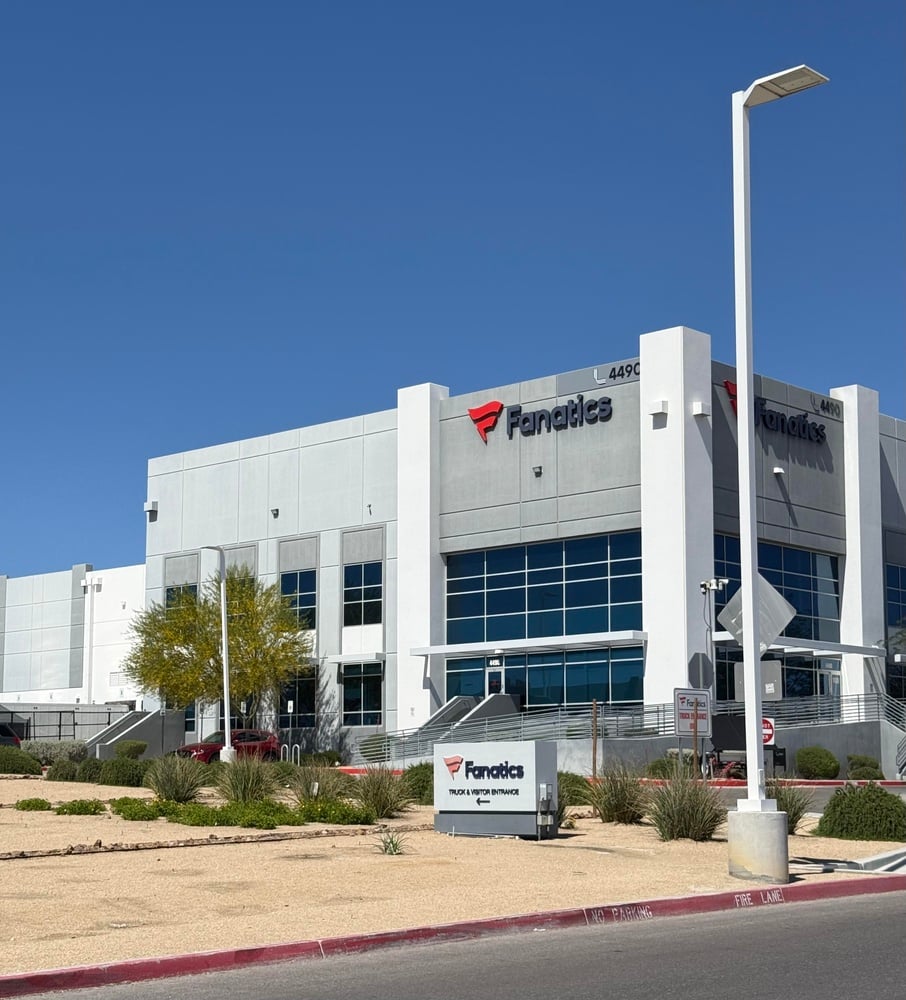
Fanatics CEO Michael Rubin expects an increasingly expensive fight for sports betting customers, estimating that industry marketing spending could more than double next year as sportsbooks and prediction markets compete for the same players.
Rubin warned Wednesday on CNBC’s Squawk Box that the next several years will be “very difficult” for the industry. But he believes Fanatics is uniquely positioned to weather the storm by leaning on its thriving merchandise and collectibles businesses.
“There was probably $3 billion spent in U.S. betting and gaming last year. I bet you there’ll be $7 billion spent next year in marketing, the overall market in the space,” Rubin said. “I mean, it couldn’t be more competitive.”
Fanatics could nearly triple its own betting and gaming marketing budget from $350 million this year to as much as $1 billion in 2027 as it looks to close the gap with sports betting market leaders and compete in the sports prediction market business.
Fanatics betting on broader business
Rubin expects the privately held company to generate $5.5 billion in revenue from its collectibles business this year, while its merchandise business is on pace to exceed $7 billion.
“The profits in those businesses allow us to be more aggressive and invest more in the betting and gaming business because we believe in it long term,” Rubin said.
That “fortunate” flexibility, as Rubin put it, has taken on greater importance as publicly traded operators face increasing pressure from investors. DraftKings shares are down roughly 48% year-to-date, while shares of FanDuel parent Flutter Entertainment are down roughly 65%.
“You’ve really gone from two strong companies in DraftKings and FanDuel to really five people competing for the customers today,” Rubin said. “Because you have not only DraftKings and FanDuel and then Fanatics, Polymarket and Kalshi and then on top of it you still have BetMGM, bet365. It is super competitive.”
Rubin unhappy with third place
Rubin said Fanatics is now approaching 10% market share, but acknowledged it still has considerable ground to make up.
“We’re a distant No. 3 in the betting and gaming business. We don’t like that,” Rubin said.
CNBC’s trailing-12-month U.S. online sportsbook figures put Fanatics’ market share at 6%, behind FanDuel (34%), DraftKings (31%), Hard Rock (8%) and BetMGM (7%).
Fanatics’ betting business draws on its broader sports commerce operation and 45 million loyalty members. Its acquisition of PointsBet U.S., from 2023 to 2024, accelerated its expansion by providing immediate state licenses, customers and betting technology.
Fanatics promoting perks more
Starting this week, the company will expand its Fair Play injury protection to cover qualifying NFL and NBA bets involving players injured at any point during a game, rather than just the first half.
Rubin also touted FanCash, the company’s loyalty rewards program, which customers can redeem for merchandise, collectibles, tickets and wagers. He expects Fanatics to issue $2 billion in FanCash next year, with 97% to 98% redeemed within 12 months.
“Those two things give us value proposition. Now we’re going to talk about it more aggressively as well, Rubin said.”
Prediction markets reshape competition
Rubin expects a prolonged battle for customers as prediction markets reshape the sports betting industry, with little consolidation likely among its largest, well-funded competitors.
“I think you’re gonna see a lot of battles over the next couple of years, which is why people are negative in the space,” Rubin said.
“By the way it will not be a fun next couple of years but the question is in 5 years, 10 years from now is this fundamentally a good business and I believe that it is and it fits in our ecosystem so well.”