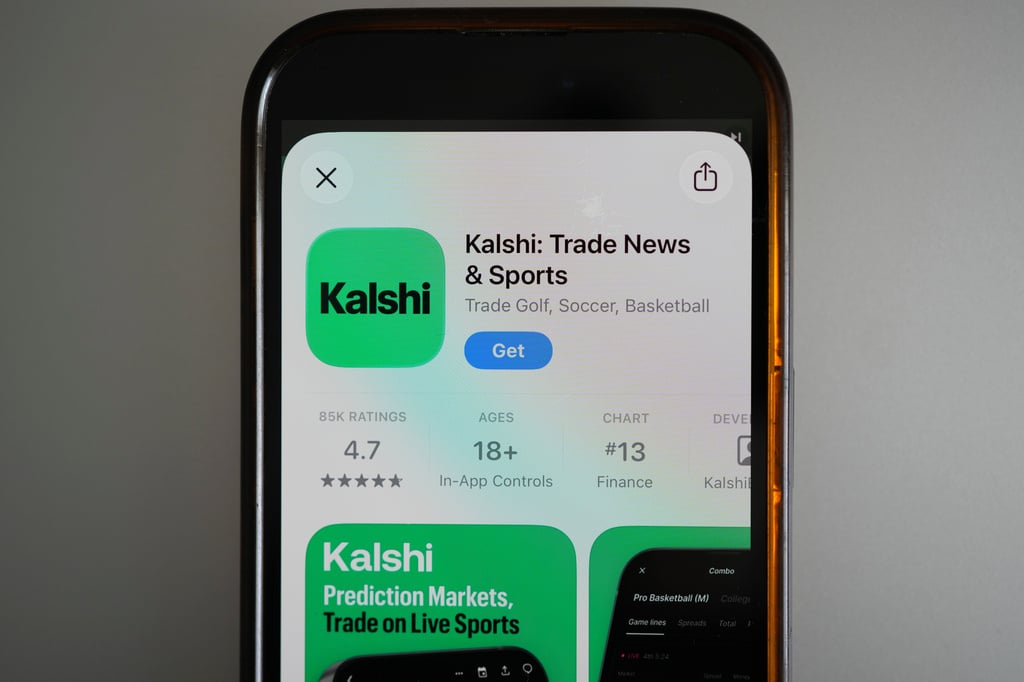
Kalshi crossed two major trading milestones in the past week.
The prediction markets platform crossed $100 billion lifetime volume on Friday. Then Kalshi surpassed $1 billion in volume on both Saturday and Sunday, the first time the platform hit that figure in a single day.
Dustin Gouker‘s Event Horizon newsletter was first to highlight the milestones, which demonstrate how quickly prediction markets have scaled across the US. It also comes with an important caveat, that trading volume is not the same as sports betting handle.
Milestones reflects rapid scaling
The milestones comes as Kalshi’s sports volume has become a larger part of its overall activity, with football markets driving much of the action in recent periods. The World Cup has helped fuel the $1 billion days, as traders poured $750 million in volume over the first four days of the tournament.
Also contributing to the big Saturday was more than $200 million on the NBA Finals concluding game.
That trend has helped push prediction markets deeper into mainstream sports betting conversations.
Volume vs. handle distinction
One of the most important distinctions between predictions and sports betting is that trading volume on a prediction market is not equivalent to handle at a sportsbook.
Volume counts matched trades, including positions opened and closed, while handle measures the amount wagered on a sporting event.
That distinction matters because a big volume number can overstate how much economic activity is really comparable to a sportsbook’s betting mix.
Growth is real, but not a sportsbook substitute
Even with the growth, Kalshi’s sports business still trails the economics of major sportsbooks in meaningful ways.
In March, parlay volume was surging on Kalshi, with parlays now accounting for more than 20% of the platform’s weekly sports trading volume, up from less than 1% at launch.
Markets still don’t yet match traditional books on pricing, hold, or product depth.
Why the milestone matters now
Kalshi’s rise keeps drawing more attention from sports betting operators, regulators and lawmakers because it raises the question of where prediction markets fit in the broader gambling ecosystem.
The larger the volume gets, the harder it becomes for the industry to treat prediction markets as a niche experiment.
It also adds pressure on the Commodity Futures Trading Commission and other regulators to define the line between event contracts and gambling-style products. That question has only grown more important as sports trading has become a bigger driver of Kalshi’s overall business.