A five-person panel before a U.S. Senate committee Wednesday could mark the first step toward changes in how prediction markets are regulated and what they can offer.
The Senate Commerce, Science and Transportation Committee held a hearing on sports integrity, featuring representatives from both the sports betting and prediction markets industries.
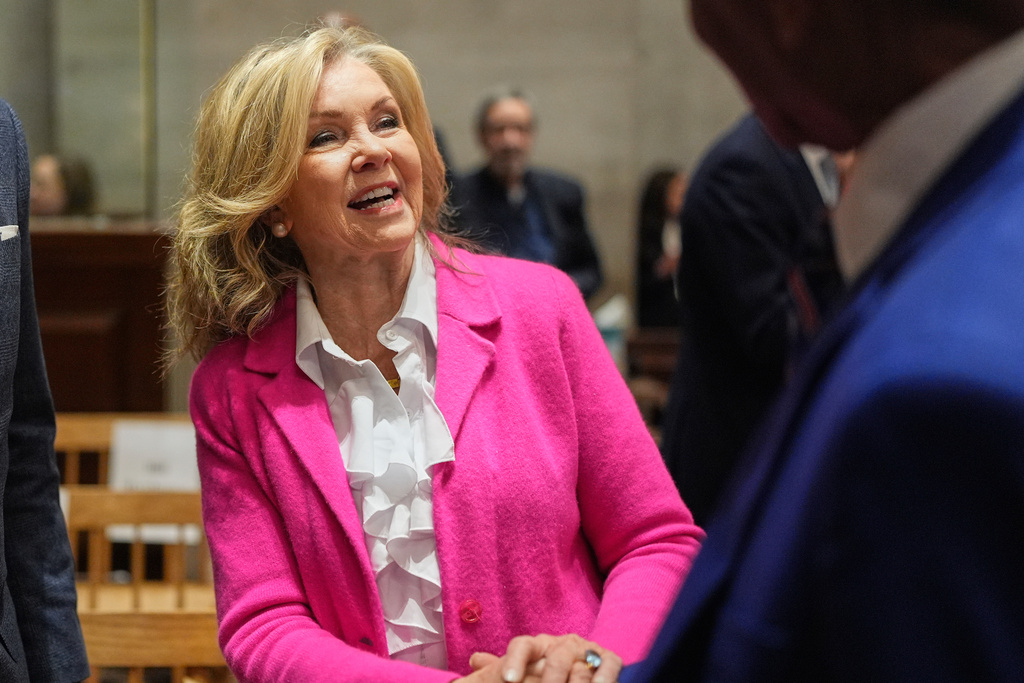
Sen. Marsha Blackburn (R-Tenn.) chaired the hearing in place of Sen. Rafael Cruz (R-Tex.) and called it the beginning of what might become an important effort to distinguish the two products. Multiple states have sued to block what they argue are illegal sports betting offerings, while prediction market operators point to federal oversight by the Commodity Futures Trading Commission.
“This does allow us to start to build where we should move in regulation and also looking at the division between what should be federal and what should be state and preserving those states’ rights in order to move forward with this,” Blackburn said.
Who was on the panel?
The panel brought in five experts of varying specialties to give their opinion on how to handle prediction markets:
- Bill Miller, CEO of the American Gaming Association
- Mary Beth Thomas, executive director of the Tennessee Sports Wagering Council
- Scott Sadin, Co-CEO of IC360
- Patrick McHenry, a former U.S. Representative that now serves as senior advisor of the Coalition for Prediction Markets
- Harry Levant, director of gambling policy at the Public Health Advocacy Institute
The five panelists will take questions through May 27 from the committee. They have until the end of business on June 10 to provide answers.
Sen. John Hickenlooper (D-Col.) noted the eagerness to engage and help from all five panelists.
“I feel that all five of you are willing and engaged to fix some of these serious, glaring problems and I look forward to working with the chair to provide a sense of urgency,” Hickenlooper said. “These are real people’s lives that are being negatively impacted right now.”
Little new information
While the hearing lasted for more than two hours, there was very little new information delivered by any of the panelists.
Miller called out predictions markets as “backdoor sports betting operations,” adding, “We know it. They know it. The American people know it.”
Thomas discussed the controls used to regulate sportsbooks and protect Tennessee’s citizens, including the use of monitoring services offered by his company and instituting strict know-your-customer and anti-money laundering rules.
Blackburn showed concern over both Miller and McHenry saying their member companies advertise on social media, saying the primary users are mostly underage and did not care to hear about algorithms.
McHenry said his members welcome the conversation over raising the minimum age from 18, but added 97% of the volume is from those 21 or older. He initially said 97% of users but quickly corrected himself.
Paying rent with prediction markets?
Hickenlooper brought up one a TikTok video including a Kalshi partner that said she struggled to pay her rent but then made enough through betting on Kalshi to cover her rent for two years.
Hickenlooper asked if it is responsible to suggest someone can pay their rent by winning predictions. McHenry said he was not aware of it, to which Hickenlooper said he now is aware of it, but McHenry never directly answered the question.
Hickenlooper also asked about Kalshi reportedly hiring a 15 year-old as a partner, which has been widely reported. McHenry said he was not aware of those reports.
“I wouldn’t condone anyone using TikTok, but that’s a separate matter,” McHenry offered.
CFTC equipped for prediction markets?
Hickenlooper said the CFTC is “inexperienced and doesn’t have any real regulations around sports betting.” He also suggested they were “easily manipulable” and pointed to operators self-certifying their own new markets.
McHenry disagreed.
“The CFTC is a cop on the beat, has the capacity to oversee this market just as they’ve done with the broader commodities marketplace that’s been around and well-versed for decades,” McHenry said.
That was news to Hickenlooper.
There is literally no one that I know, you’re the first person that’s told me you that they think the CFTC is up to the standards,” Hickenlooper said incredulously.
The CFTC has a staff of less than 500, giving it fewer regulators than the state of Pennsylvania alone, Miller said.