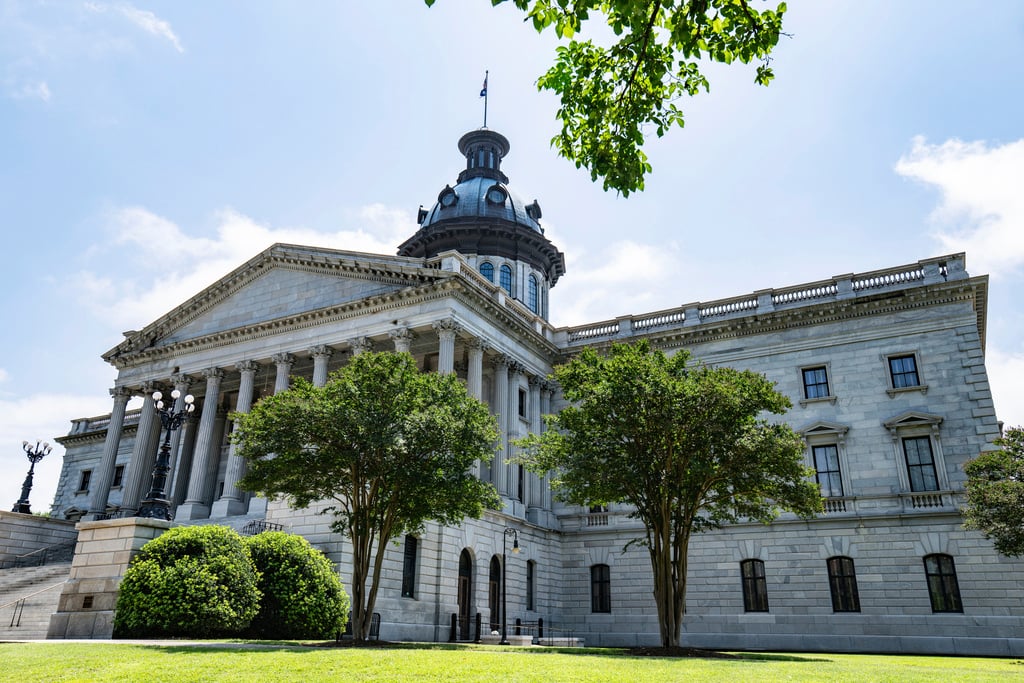
A sports betting bill introduced in the South Carolina legislature last year finally received a hearing.
A five-person subcommittee for the Senate Labor, Commerce and Industry Committee heard S 444 Wednesday morning but did not take a vote. The intention is to continue the conversation, but the bill does not have another hearing scheduled yet.
The only action taken by the subcommittee was to approve an amendment by a 3-2 vote that allows the PGA Tour and NASCAR, the two professional leagues that hold events in the state, to be licensed for sports betting.
There is no crossover deadline in South Carolina, which adjourns its legislative session on May 7.
South Carolina sports betting details
S 444 would legalize statewide online sports betting and create a South Carolina Sports Wagering Commission to regulate the industry.
The bill authorizes up to eight online licenses, requires operators to already be licenses in at least five other jurisdictions, and sets the legal betting age at 18.
Sportsbooks would face a $100,000 application fee and a $1 million license fee, while the state would collect a 12.5% tax on sports betting revenue.
Operators would be allowed to deduct on promotional spending and federal taxes before paying the state and could carry losses over to subsequent months.
Supporters promote tax dollars to be made
Those in favor of legalizing sports betting in South Carolina pointed out the potential tax revenue that could be made.
Trevor Hayes representing Caesars told lawmakers a “conservative estimate” puts annual tax revenue from legalized online sports betting at $50 million to $60 million.
“We’re not going to solve every budget problem,” Hayes said. “But this is meaningful revenue that can address smaller needs and keep money from leaving the state.”
Ron Heart, director of government affairs at PrizePicks, asked that the bill be amended to regulate and tax fantasy sports. That would bring another $5 million to $10 million annually based off taxes and fees, he said.
Data shows residents try to bet
Hayes also cited data from GeoComply, which showed nearly 12 million geolocation checks were blocked over the past year as users inside South Carolina attempted to access legal sport books operating elsewhere. North Carolina and Tennessee are its two border states that offer legal mobile betting.
According to the testimony, more than 415,000 accounts tied to South Carolina users already exist, and during the most recent NFL season, more than 50,000 residents crossed state lines to place legal bets.
Those numbers are up compared to the stats given at another hearing in South Carolina last year.
“This is demand that already exists,” Hayes said. “The question isn’t whether sports betting is happening. It’s whether it happens in a regulated market.”