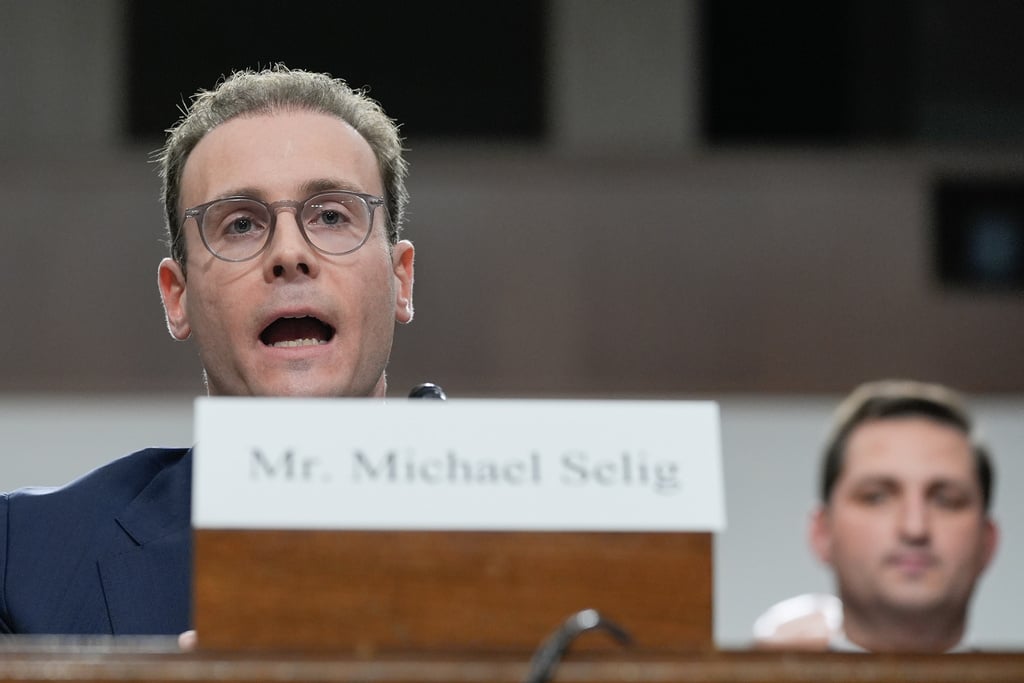
The new chairman of the Commodity Futures Trading Commission sounds ready to take on prediction markets, including sports event contracts.
Michael Selig said on Thursday that the CFTC is ready to remedy confusion around event contracts by seeking to “modernize, harmonize, and future-proof” its regulation in order to support “the responsible development of event contract markets.”
That includes entering court cases at the federal and state level to defend the CFTC’s right to regulate sports predictions and other event contracts at the federal level.
First case suggested prediction markets would succeed
Litigation surrounding prediction markets offering sports-related event contracts began in earnest when Kalshi initiated legal action in response to cease-and-desist letters received from both the Nevada Gaming Control Board and New Jersey Department of Gaming Enforcement.
Kalshi won its first battle in federal court when the US District Court for the District of Nevada granted its motion for preliminary injunction upon finding that Kalshi was likely to succeed on the merits of its claims based on its position that “the [Commodities Exchange Act] preempts state law due to the [Commodity Futures Trading Commission]’s exclusive jurisdiction over a [designated contract maker], which Kalshi is.”
In doing so, the court discussed the difficulty of allowing states to regulate a national exchange due to varying state laws as further support as to why Congress granted the CFTC exclusive jurisdiction over CFTC-designated exchanges and stated, “To the extent the States or other interested parties object to Kalshi offering sports and election event contracts, they must take that up with the CFTC and Congress. Such policy issues are beyond the jurisdiction of this court.”
Subsequent cease-and-desist letters, attorney general opinions, and recent court decisions such as in Maryland and Nevada’s about-face regarding applicability of the CEA have only bolstered the original sentiments surrounding the impracticality of fitting a federally-regulated product within a state-by-state framework.
CFTC rolls back memos on sports prediction markets
In furtherance of the CFTC’s modern approach, Selig announced that he directed CFTC staff to withdraw: (1) proposed rulemaking that sought to prohibit political and sports-related event contracts as those that involve “gaming” contrary to the public interest in violation of the CEA, and (2) a staff advisory that cautioned prediction market participants from offering sports-related event contracts in states with ongoing litigation.
While the CFTC’s withdrawal of the proposed rules provides a level of comfort regarding the Commission’s stance on offering such products, the retraction of the staff advisory may prove the more immediately impactful move as it relates to ongoing litigation.
As Selig mentioned in his remarks, “While the advisory was issued at the staff level with the intent of bringing awareness to the litigation, it has instead contributed to uncertainty in our markets.”
This notation likely refers to the state regulator’s reliance on the staff advisory as means to highlight the need for prediction markets to adhere to state law’s (including, without limitation, geofencing certain jurisdictions from accessing prediction markets), which actually undermines the CFTC’s intended “exclusive jurisdiction” approach.
CFTC event contract rulemaking underway
Additionally, Selig directed CFTC staff “to move forward with drafting an event contracts rulemaking” in order to provide “clear standards for event contracts.”
Based on closing statements focusing on investor protection, anti-fraud, anti-manipulation, and market integrity, it could be presumed such rules will focus on various consumer protections (i.e., age limits, risk disclosures, trade requirements or restraints), explicit limitations/prohibitions on market participants engaging in certain event contracts, and other provisions to prevent and/or protect against predatory trading practices that could take place on exchanges.
Notwithstanding, any proposed rulemaking remains subject to public comments addressing issues, concerns, and/or outright challenging the potential impact of the rule, and the promulgation of any final rule could be subject to legal challenge in court.
CFTC participation in prediction markets suits
In what may be considered the most important measure in supporting prediction markets, Selig also directed CFTC staff “to reassess the Commission’s participation in matters currently pending before the federal district and circuit courts,” specifically as it relates to jurisdictional issues regarding what laws are to be applied to prediction markets and event contracts.
Selig’s remarks further noted that “the Commission has the expertise and responsibility to defend its exclusive jurisdiction over commodity derivatives.”
Not only would the CFTC’s participation prove vital to prediction market litigation by supporting arguments already raised by Kalshi, Crypto.com, and affiliates, but the CFTC’s acknowledgement of the need to “defend its exclusive jurisdiction” would also appear to apply to attacking recent state bills seeking to prohibit event contracts.
While none of the foregoing addresses the ultimate issue of whether the CEA preempts state law, it does present a shift that could assist in turning the tide back in prediction markets’ favor. Notably, Selig’s comments arrive following a string of legal losses and actions filed to stay or overturn court injunctions prohibiting the platforms. The outcome of whether prediction markets can operate unfettered by state law will likely still be determined based upon statutory interpretation and/or legislative intent surrounding Congress’ enactment of the CEA.