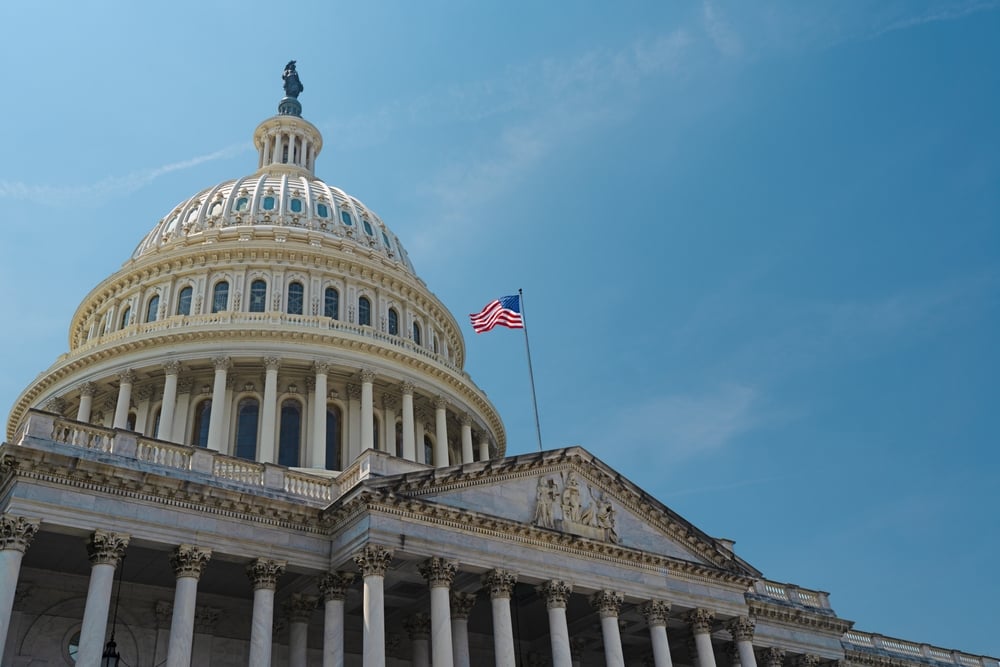
Prediction markets “shouldn’t be allowed to offer sports wagers,” Massachusetts Gaming Commission Chair Jordan Maynard told Congress Wednesday, accusing the platforms of circumventing state gambling protections.
Maynard was responding to Rep. Bob Onder (R-MO), who asked what Congress should do about prediction markets and their impact on young people during a House hearing on college sports betting.
Similar, but different rules
Massachusetts requires sportsbook customers to be at least 21 and prohibits operators from accepting wagers on individual college athletes’ performances.
Federally regulated prediction markets, by contrast, generally allow trading from age 18 and are not subject to the same state sportsbook restrictions.
In his written testimony, Maynard accused prediction markets of offering college player props that Massachusetts has prohibited to protect student-athletes.
Maynard said his commission regularly hears from prediction-market customers who assume it regulates the platforms and are “seeking rules clarification, consumer protection relief, or responsible gaming help.”
“We actually get calls at the Massachusetts Gaming Commission asking for us to intervene when there’s patron disputes on companies that we don’t regulate,” he told lawmakers.
Regulators cannot help with prediction markets
The commission cannot intervene in those disputes. The CFTC, Maynard wrote, is “simply not equipped to or interested in regulating nationwide consumer sports betting markets.”
“We have basically two sets of standards for a product that looks exactly the same to the end user,” Maynard said in response to a question from Rep. Alma Adams (D-NC).
Adams agreed prediction markets are undermining state gambling laws, saying they “have blown a hole straight through them.”
Kalshi maintains that its sports contracts are federally regulated swaps.
“As a national derivatives market overseen by the CFTC, Kalshi answers to federal law, and no single state should have a veto over it,” spokesperson Jacki McGavick told the Deseret News last month, responding to a lawsuit from Utah.
Massachusetts vs. Kalshi
Massachusetts sued Kalshi in September 2025, alleging the company was operating an unlicensed sports betting business. Maynard told lawmakers his commission supports the lawsuit.
A Massachusetts judge ruled in January that Kalshi must stop offering sports bets without a state license. The resulting order was later put on hold while Kalshi appealed.
The state’s highest court heard the case in May but has yet to make a decision.
National implications
In October, the CFTC proposed classifying event contracts, including sports contracts, as swaps under its exclusive federal authority, potentially overriding state gambling restrictions.
The public has until Nov. 18 to comment on the proposal.
Federal appeals courts have split on whether state gambling laws apply to Kalshi’s sports contracts. The Third Circuit sided with Kalshi against New Jersey, while the Ninth Circuit sided with Nevada, prompting New Jersey to seek a ruling from the U.S. Supreme Court.
Polymarket currently gives the Supreme Court a 3% chance of agreeing to hear a sports event-contract case by Dec. 31 this year, largely a reflection of timing: Kalshi’s response isn’t due until Dec. 7.
What happens next with prediction markets
Two bills before Congress could address the issue.
Rep. Michael Baumgartner’s (R-Wash.) PROTECT Student Athletes Act would ban prop bets on college athletes’ performance, while Rep. Steven Horsford’s (D-Nev.) Prediction Markets Are Gambling Act would prohibit sports and casino-style contracts on federally regulated prediction markets.
Neither bill has advanced beyond committee, leaving the immediate fight over sports contracts in the hands of the courts and the CFTC.