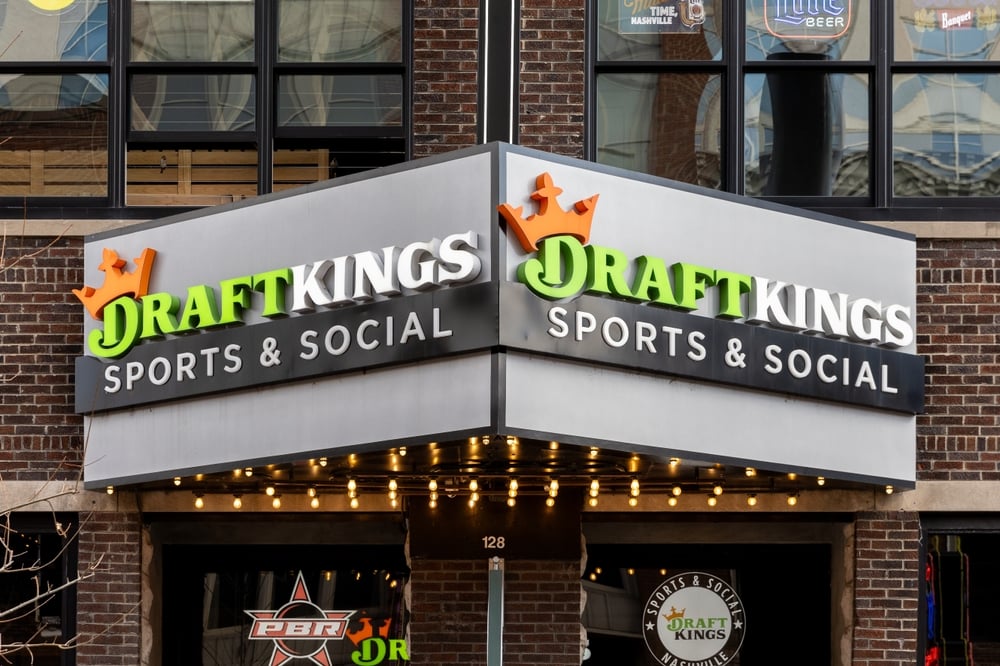
DraftKings is pushing back against claims that the company utilizes artificial intelligence to target problem gamblers.
The sports betting operator sent a letter last week to three Democrat members of Congress, Sen. Richard Blumenthal and Reps. Paul Tonko and Rep. Valerie Foushee, according to InGame. The trio demanded answers after a September New York Times report alleged the company used AI to gear perks and VIP treatment toward losing gamblers.
In the letter, DraftKings denied those allegations and spelled out some of the company’s responsible gaming systems in place.
“DraftKings shares your commitment to responsible engagement,” the letter reads, which was signed as from “DraftKings Inc.”
DraftKings touts RG team
One way DraftKings monitors for problem gambling is a multi-layered engagement program that combines customer-directed tools and resources, automated behavioral monitoring, customer engagements, and review by trained personnel.
DraftKings is the only U.S. operator with a chief responsible gaming officer reporting directly to the CEO, according to the letter. That role is supported by a team of more than 50 full-time employees dedicated to responsible gaming, the company noted.
Employees receive annual responsible engagement training, which totaled more than 10,700 hours in 2025, according to the company. The sportsbook noted that AI wasn’t used to target losing gamblers, but was used as a tool to tailor offers to users based on sport preference or wagering range “rather than designed for any one particular person.”
The company estimated that 80-90% of offers are available site-wide, however, and not geared toward individual bettors.
DraftKings details rewards program
In addition to the responsible gaming issues, the company addressed questions regarding the DraftKings Rewards program. The initiative offers additional perks and rewards to higher-level customers, with just 1% at the highest tiers. DraftKings added that protocols were in place at these levels to prevent customers from losing control of their wagering.
“Importantly, responsible engagement restrictions are applied to exclude certain customers from receiving marketing communications from DraftKings,” the letter said. “DraftKings maintains a list of customers who are ineligible to receive promotions, based on criteria including self-exclusions, ‘cool-offs’, other responsible engagement restrictions, and universal opt-outs from gaming-related communications.”
That list is updated regularly and published to internal servers and systems almost hourly each day, according to management. This system helps control customer messaging, applying the list before any email, push notification, or in-app message is sent. The company added that the system came after working with government bodies and leaders.
The company’s systems act on new restrictions within a 24-hour standard, which DraftKings set based on consultation with regulators and industry norms, the letter says. Customers can also opt out of direct promotional marketing at any time.
“Simply put, customers under active self-exclusions, cool-off periods, responsible engagement suspensions, or bans are not eligible for DraftKings’ promotions, and do not receive promotional communications,” the company says.
Hosts trained to address risky betting behavior
Another contentious issue the three inquired about included the use of hosts for VIP customers. The company stressed these customers faced the same responsible gaming scrutiny as other bettors on the platform.
“If a host identifies that a customer might be exhibiting potential signs of problematic play, they are required to escalate to the DraftKings’ Responsible Engagement Team (RET) for further review,” the company said.
That could lead to further action to ensure a customer is showing signs of irresponsible gambling. Any communications indicating self-harm immediately are escalated to crisis management, threat assessment, and responsible gaming teams for additional action.
Additionally, hosts are assigned 10 customers each month for a responsible gaming check. This process involves communicating with bettors about three key issues:
- if they are playing within their means.
- if their play impacts their quality of life.
- if they are playing for entertainment purposes.
“DraftKings trains every employee, including hosts, on responsible engagement,” the company said. “While all employees receive annual responsible engagement training, DraftKings’ customer-facing employees receive additional training.
“Due to their familiarity with their assigned customers, hosts are well-positioned to identify potentially problematic behaviors and escalate these instances to the RET.”
Push for RG measures continues
State gaming regulators and even federal lawmakers have zeroed in on additional responsible gaming measures in recent months.
A study released in October from the Johns Hopkins Bloomberg School of Public Health found that states saw significant increases in filled prescriptions for antidepressants and anti-anxiety medications, as well as outpatient diagnoses of depression and anxiety, after legalizing online sports betting.
Researchers found that legalization was associated with increased probabilities of an outpatient diagnosis of depression. That included a 6.73% increase for men and 5.47% increase for women along with increased probabilities of using antidepressant medications, up 5.44% for men and 5% for women.
“I hope these results will increase awareness among psychiatrists and primary care doctors who treat mental health, as well as online sports bettors themselves, that these online apps can lead to harms beyond financial risks,” the study’s senior author Dr. Mark Meiselbach said.
Other recent studies point to increased gambling among younger people. The Center for Gambling Studies at Rutgers University reported in October that 52.5% of young Americans reported gambling in the past year, including 42.7% of young people ages 13 to 17.
Sports betting operators have argued that they face stringent regulations at the state level and have numerous initiatives in place to prevent problem gambling. Additionally, states offer other tools for those concerned about gambling addiction, including self-exclusion counseling, and other services.
Like DraftKings, FanDuel has also denied using AI to target gamblers and indicated that the company also has significant programs in place to help deter harmful wagering from customers.