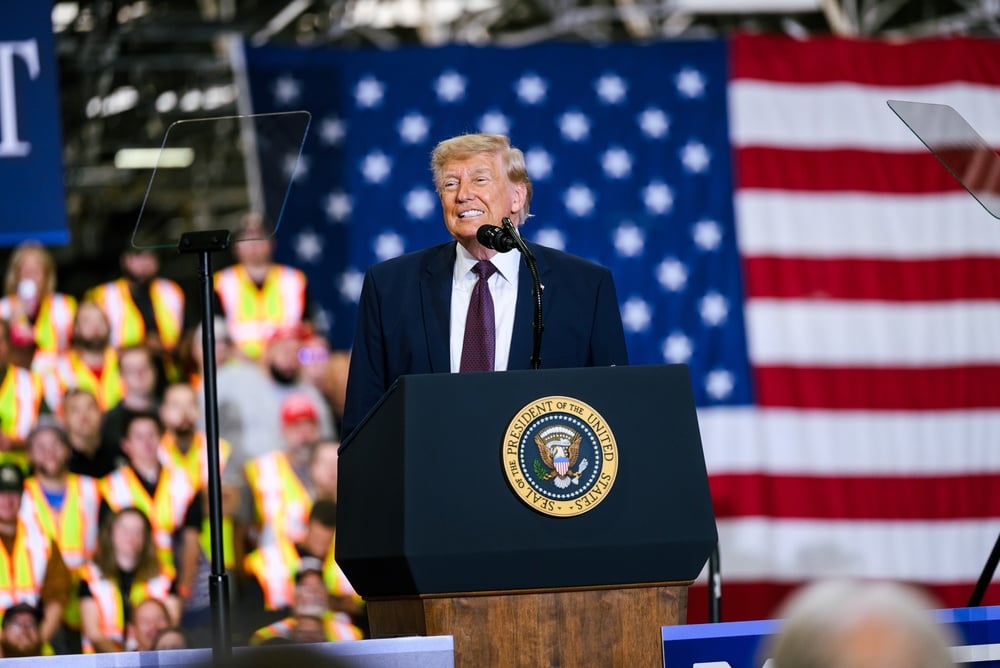
Mention markets on Kalshi concerning President Trump have been paused since Nov. 13, but new analysis shows they were largely accurate in predicting what President Trump would say, though traders kept overpaying for some words.
Resolve Markets, an independent analytics service concerning prediction markets, looked at 9,303 markets across 348 Trump speeches and appearances featured on Kalshi from February 2025 to November 2026, covering 321 million contracts.
Trading grew sharply. Contracts per event rose from about 140,000 in spring 2025 to 1.7 million in early 2026, more than a twelvefold increase. The biggest event was the 2026 State of the Union address, with 28 million.
Kalshi paused the markets at the order of the Commodity Futures Trading Commission. CEO Tarek Mansour disagreed with the pause, which has led Kalshi’s mention market volume to fall nearly 90% since February‘s peak.
What prediction markets got right
When the daily markets launched in April 2025, 72% of the favorites won, but by the end that figure rose to 76%.
Other measures improved over time too, suggesting traders developed a better mental model for predicting what Trump would say. The premium traders paid for YES fell by a quarter, and the bid-ask spread, the gap between the price to buy and the price to sell, narrowed by about a third.
The markets were rarely fooled at the extremes: one hour before Trump spoke, words priced at 90¢ or more were said 95% of the time, and words at 10¢ or less only 5% of the time.
Yes bias on prediction markets
One of the best-known biases in prediction markets is the long-shot bias, where traders overpay for unlikely outcomes.
Resolve found something different: traders overpaid for YES. On average, a word was priced at 50¢ but said only 47% of the time, and every price range from 10¢ to 80¢ was said less often than its price implied.
This could show how difficult it is to predict the exact words a person will use, even when you have the topic right.
“Ceasefire” was priced at 24¢ and said just 9% of the time.
Not every word was overpriced, though: “Trillion,” priced at 64¢, was said 80% of the time.
Rallies were the easiest to predict, and interviews the hardest, suggesting it was easier to judge what a Trump rally would cover than what an interviewer would ask.
A Wall Street Journal analysis of more than 35,000 Kalshi mention markets, covering every kind of speaker and event rather than just Trump, found the same pattern: YES contracts priced at 50% paid out only about 40% of the time.
Little gained before the speech on Kalshi
Prices three hours before a speech were about as accurate as prices when it began, so trading in the run-up added almost nothing. That suggests insider trading was not widespread enough to materially improve market prices in the final hours before an appearance.
It did happen, though. In August, the CFTC ordered former White House teleprompter operator Gabriel Perez to hand back $107,539 in profits and pay a $65,000 penalty for trading on advance copies of Trump’s speeches, which he generally saw about an hour before Trump spoke. Kalshi’s own surveillance had flagged his trades.
Busted bonds
In prediction market parlance, a bond is a contract with a very high or low probability of success, bought to make a small profit. Betting that aliens won’t be discovered, or that Jesus won’t return to Earth this year, are two classic examples.
In a Trump-mention market, a bond might be buying YES on one of his rally staples, like “fake news,” “tariff,” or “Biden,” or buying NO on a word he almost never uses.
In 236 markets, about one in 40 of the total, a word or phrase traded at 99¢ or 1¢ and then settled the other way. Trades would have spent 99¢ to win 1¢ and lost in those cases.
What happens next for Kalshi
The CFTC’s concern is that a market riding on one person’s words can be gamed, either by insiders who know what’s coming or by the speaker himself. It suspects Kalshi incorrectly told regulators the markets were safe from manipulation, but it has not made a final ruling.
Kalshi has until Dec. 11 to make its case. The regulator can then bring the markets back, let Kalshi change the contract rules, or take further action.
Until then, Trump mention markets are still trading on Polymarket‘s international site, which US traders can’t use.
The markets learned
The data makes a good case for what prediction markets do well. As they grew, their prices got sharper: favorites won more often, the gap between buying and selling prices narrowed, and the premium traders paid for YES shrank by a quarter.
Their predictive power improved over time, giving traders and observers a sharper read on what Trump was likely to say.
What the world gets for an accurate idea of what Trump will say is another discussion. Kalshi has argued that mention markets let businesses hedge against what public figures say.